Wednesday, July 24, 2013

Roses, Oranges and Oedipal Eyeballs

(The following is a slightly revised and expanded version of an essay, with added images, quotes and links, that I read for the Synchronize podcast.)

The eye through which I see God is the same eye through which God sees me.
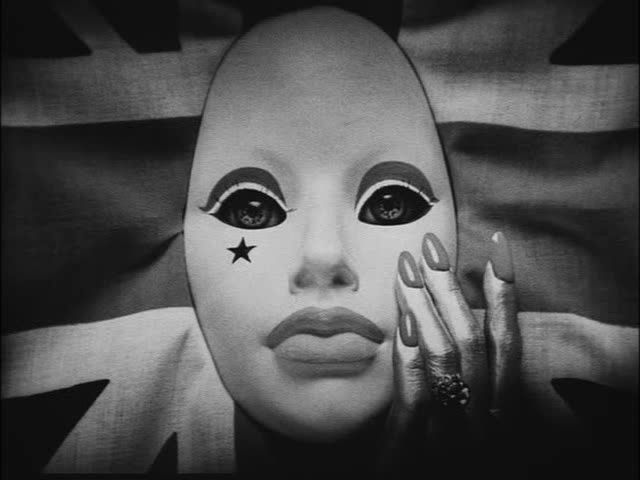
http://a397.idata.over-blog.com/2/31/51/01/790/Fr-9.jpg

The 2006 DVD release of director Toshio Matsumoto's 1969 debut feature film, The Funeral Parade of Roses, has over the past few years generated a renewed fascination for this lost classic of Japanese new wave film. This film, in its presentation of the gay and psychedelic subcultures of late 1960s Tokyo and in its transgressive depictions of sex, violence, radical politics and avant-garde film-making, is truly a portal back to a very different era. 

The film's supposed influence on Stanley Kubrick's A Clockwork Orange is by now almost common knowledge among lovers of strange films. The similarities in style and mood of the two films are immediately obvious. The sped up scenes accompanied by ironic music of fighting drag queens in Parade and ménage à trois sex in Clockwork, the rival gangs, the excessive lifestyles of the gay-boys and the droogs, have been noted and compared numerous times.

http://www.mahala.co.za/wp-content/uploads/2011/01/clockwork_orange_book_cover.jpg

A less often explored comparison, though, is that of theme. An explicit source for Funeral Parade of Roses is the myth of Oedipus, specifically Sophocles' tragedy Oedipus Rex. In both the myth and the play Oedipus is destined to murder his father and marry his mother. Despite the best efforts of both Oedipus and his parents to avoid this fate the inevitable occurs. On finally discovering the truth his mother, Jocasta, commits suicide and Oedipus blinds himself.
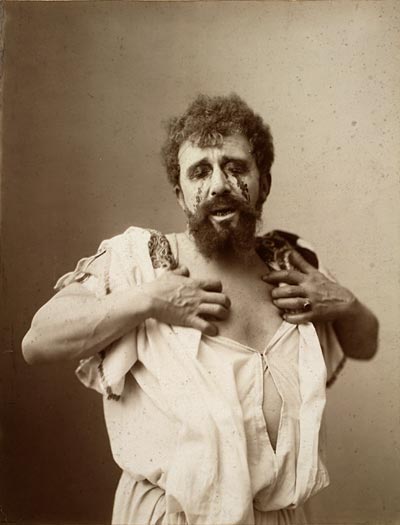
http://prschool.files.wordpress.com/2010/10/31.jpg?w=490

This myth was the basis, of course, for what Freud called the Oedipus Complex, perhaps best summed up by the song "The End" by the Doors -- "Father -- yes, son -- I want to kill you, and Mother I want to rape you."
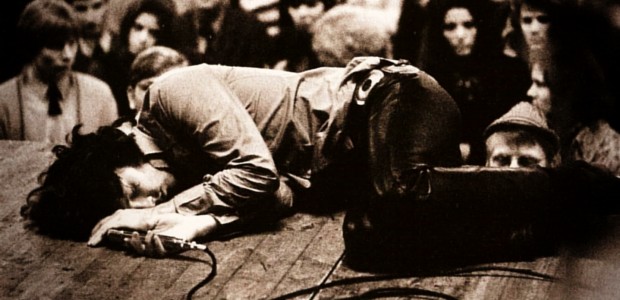
http://images.upvenue.com/pics/articles/7-most-controversial-jim-morrison-moments-1409.jpg

Eddie, the young transvestite protagonist played by real-life Shinjuku gay-bar dancer, Peter, in his debut on the big screen, is clearly Oedipus. And, at the slight risk of spoiling an unspoilable film, Funeral Parade is at first viewing an inversion of the classical myth -- Eddie kills his mother and sleeps with his father. When the truth is finally revealed the father kills himself and Eddie stabs in his own eyes.

In a closer viewing, though, we find that this inversion is only apparent. Eddie has flashbacks of his father abusing him as a child, and later abandoning he and his mother. When Eddie suggests to his mother that she forget her departed husband because she has him -- the classical Oedipal outcome -- his mother laughs in his face, causing deep trauma.

https://blogger.googleusercontent.com/img/b/R29vZ2xl/AVvXsEj8NlMMFPRdSveD26nk7SUOT-IBuMnkx0g3enbA3fto6Oq22wZYS3ZRynwZocm-M1cE4fNMfP5tJCLaysilHjQwBlGOX28hUWtxNyO5Yha8ei45JuPUwpq5qNM9LVnBgjdqeZ4FGKtmwkYb/s1600/bscap0110.jpg

Later, when young Eddie finds his mother making love with another man, Eddie stabs and kills the man -- the surrogate father -- and then slays his mother, sitting on her supine body and stabbing downward in a manner clearly resembling rape. Leda, the mamma-san of the gay bar that Eddie much later becomes a hostess for, as his boss and as the lover of his actual father becomes his surrogate mother. Her own suicide, followed by that of his father and Eddie's own blinding, completes the mythic cycle.

http://25.media.tumblr.com/tumblr_l9bfu74hYs1qzzxybo1_500.png

A Clockwork Orange can also been seen as reworking of the myth of Oedipus. Alex, the film's anti-hero, takes on several father figures, perhaps because his own biological father is shown as being a weak and powerless man. This theme is even more explored in Anthony Burgess' original novel. The principle father figure is the writer F. Alexander who lets an abused Alex into his house, initially not knowing that Alex and his droogs had brutally raped his wife two years before, eventually leading to her death.   

In the novel, Alexander is the author of a manuscript called "A Clockwork Orange" and so, in a sense, he is Anthony Burgess himself -- a writer whose own wife was beaten and raped by four American GI deserters during the war. Kubrick alludes to this connection by referring to an "Alex Burgess" in a brief shot of one of the newspapers announcing Alex's suicide attempt.

Like Funeral Parade of Roses, A Clockwork Orange is also a story of the eye, a tale of perception. Alexander's eyes are forced to witness the brutal violation of his wife just as Alex's eyes are pried open by the State during his Ludovico treatment and made to view horrific acts of violence on screen. By blinding himself, Eddie, like Oedipus, attempts to negate all that he has seen and done. Alex and Alexander, son and father, are compelled against their will to witness the ultra-violence of their time.   


Both films centre on the eye. Alex's right eye is accentuated by false eyelashes,  another visual motif that Kubrick directly borrows from Matsumoto. In fact, Matsumoto's short film, released immediately before Funeral Parade and using some of the same footage, is called For The Damaged Right Eye. Alex has stylized eyeballs on the cuffs of his shirt, the eye on the right featured prominently on the iconic movie poster.

http://shyfyy.files.wordpress.com/2012/12/aclockworkorange.jpg

In an interview, Toshio Matsumoto discusses his desire to transform perception in his films and in Funeral Parade of Roses most notably. He explains that all art, even the most subversive, eventually becomes formulated and co-opted into the system. He points out that even the law of perspective in painting is "an institutional system." It conditions the way that we perceive both art and the world, and it is now so commonplace that it is almost entirely unquestioned. The role of the real artist is to challenge and overthrow all such institutions of perception.

http://24.media.tumblr.com/tumblr_lu7a4f7M3h1qgwmzso1_500.jpg

This extreme viewpoint was prominent in the late sixties, a period Matsumoto considers to be the most radical since the 1920s. The global student movement, radiating outward from Nanterre in Paris in May of '68, existentially challenged the political and social establishment. This in turn sparked off an even deeper revolutionary movement -- the desire to negate all forms of power, even those unexamined forms within our own act of perceiving the world and ourselves. He admits that during the making of Funeral Parade that his main concern was to "devour the system." In his own words:

Anyway, that's how I started to think. ... how to devour this system. As a political problem, the system is not only the power that oppresses people in this or that way or visible forms of political repression. Power is also what systematizes our thought, feelings, art, and culture in invisible ways. If we don't become aware of this and shake its foundations, we cannot move the structure of power in a real sense. That's why... we came to be controlled by more invisible things like human consciousness, feelings, points of view, or values. I thought that the most pressing issue facing art was how to become aware of this and work to undermine the system as a form of customary inertia. Films that startle and arouse self-awareness of that kind of internal distortion change the condition of cinema itself--this I think is art's form of struggle against authority. 

In Matsumoto's view, power will eventually systematize all modes of thinking and perceiving. Art will always be absorbed and neutralized in this way, and sync of course is no exception to this. Art, if it is anything at all, is a continual process of de-systemization. It constantly challenges and overcomes the boundaries of perception. If it does not do this we are soon enslaved.


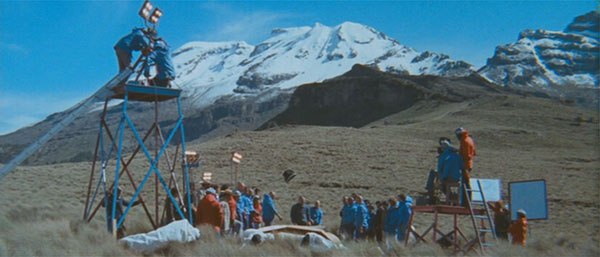
Funeral Parade of Roses challenges boundaries by breaking the so-called "fourth wall." The characters in the film reveal that they are simultaneously the subjects of a real-life documentary. In A Clockwork Orange, in the book more so than the movie, this wall is breached by having the book, A Clockwork Orange, itself appear in the narrative.
http://deeperintomovies.net/journal/image08/holymountain3.jpg

In a chapter in Burgess' book, Alex is able to read a section of Alexander's manuscript. Alexander describes here how people are as fruit hanging on a great tree of life planted and tended by God. In the modern era, though, God has withdrawn and human individuals are on the verge of becoming machines -- clockwork oranges. The true god, the original father, is absent from the world and we are now dominated by a different patriarchal authority -- scientific mechanization and the State and elite who profit from this system.

It's interesting that a similar point of view is expressed by the character of the Fool in a famous scene within Akira Kurosawa's 1985 epic film, Ran. The Fool is also played by Peter, in his most well-known role since Funeral Parade of Roses. On the battlefield, at the death of his master Hidetora -- Kurosawa's King Lear, Kyoami the fool laments that there are no gods or Buddha. He cries:

If you exist, hear me! You are mischievous and cruel. Are you so bored up there that you must crush us like ants? Is it such fun to see men weep?


The Fool is wise just as Oedipus' adviser, the blind Tiresias, was the only man who could truly see. We are all subject to the spiteful caprices of the god of this world. Manifesting as an evil destiny to Eddie and appearing as conservative or liberal representatives of the establishment to Alex, this appears to be the final father to slay. 

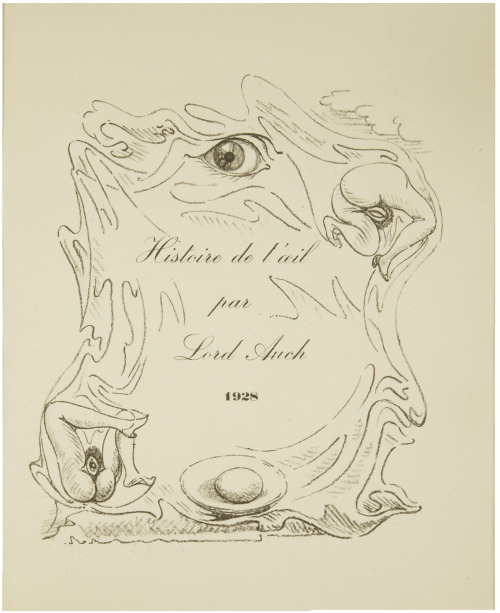
Georges Bataille's 1928 novella, The Story of the Eye, is a likely influence on both Funeral Parade and Clockwork. Its grotesque episodes of total transgression are in excess of those in both movies. The twenties were more radical than the sixties. The book's climax -- a violent orgy in a church involving the brutal murder of a priest and the use of his eyeball in the sexual rites -- aims at total sensory and conceptual liberation.
http://25.media.tumblr.com/3415536a53cff59e37917962c39e309f/tumblr_mnm0wnJHRN1ss41y7o1_500.jpg

Bataille himself has a complex but direct link to the myth of Oedipus -- his father was blind at the time of Bataille's conception.  He addresses this in his W.-C. Preface to Story of the Eye:

Since my father conceived me blind (absolutely blind), I cannot put out my own eyes like Oedipus. Like Oedipus I guessed the riddle: nobody guessed further than me.

http://fiche-manga.allmyblog.com/images/fiche-manga/1_20081014_091425.jpg

Bataille, and The Story of the Eye in particular, went on to become a major influence on the generation of May '68 in France. Radical theorists, Gilles Deleuze and Felix Guattari, often cite Bataille as an influence and it was these two who launched a direct assault on Freud's doctrine of the Oedipus Complex.

In their seminal 1972 text, Anti-Oedipus, they assert that Freudian psychoanalysis, in its efforts to resolve the Oedipus Complex, is really only a tool by capitalism and the state to make the individual members of the nuclear family repress their own desires and conform to the organizing principles of society. The familial father is neutralized, but he is replaced by a much more powerful patriarch.


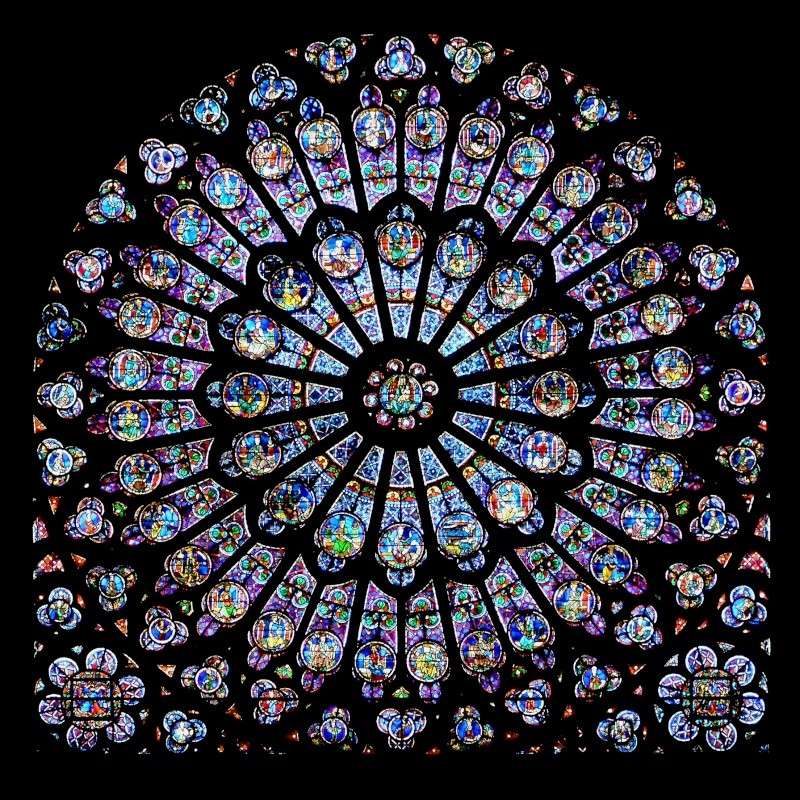
The titles of Funeral Parade of Roses and A Clockwork Orange hint at a repression and oppression that can only be called gnostic in its depth and malevolence. Both roses and oranges are solar symbols, and the Demiurge has always been identified with the Sun. A funeral parade (or funeral parades -- plurality is not indicated in Japanese) is a procession of death. A clockwork mechanism is similarly the endless unwinding of dead matter.  

Neither the rose nor the orange, nor even the Sun are essentially negative images. Each contains vitality and joy of expression. The eye is also a symbol of the Sun. These symbols have all been co-opted by the system of control, but this does not need to be the case. Liberating symbols can again be liberated. William Blake in particular recognized this.
http://i33.servimg.com/u/f33/16/83/31/24/rozeta10.jpg

Blake wrote in his epic poem Jerusalem that:

A man's worst enemies are those 
Of his own house & family.

Blake understood, like Deleuze and Guattari, like Bataille, and like Kubrick and Matsumoto, that the conformist, authoritarian, life-stifling will of society is most effectively brought down on the visionary artist by the close family. It is our parents, our siblings, our spouses, children and closest friends, not the police or government or other figures of authority, who most intimately pressure us to give up our wild dreams, to reign in and snuff out our creative imagination. It is the nuclear, Oedipal family that most limits our vision.

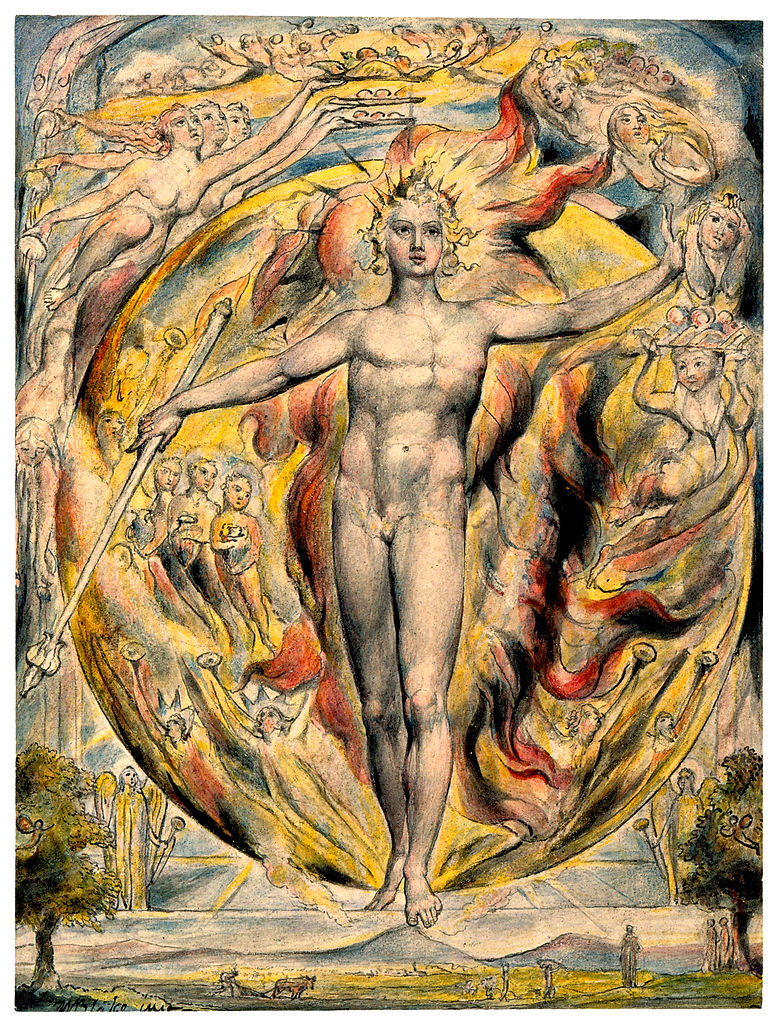
Blake called this limitation the single vision in contrast to the double vision of imagination.  He most famously illustrated this with the image of the Sun. He wrote:

"When the sun rises, do you not see a round disc of fire somewhat like a guinea?" O no, no, I see an innumerable company of the heavenly host crying "Holy, Holy, Holy is the Lord God Almighty."
http://upload.wikimedia.org/wikipedia/commons/thumb/f/f4/Penseroso_%26_L%27Allegro_William_Blake3.jpg/778px-Penseroso_%26_L%27Allegro_William_Blake3.jpg

The prosaic, guinea Sun is what the Oedipal family, what the authoritarian State with its materialist ideology, wants us to see. To see anything else is to be, by definition, crazy. The doors of perception must be kept firmly closed. The power system is well aware that the only escape from the reign of clockwork, from the endless procession of funerals, is through the eye.

In the two films this escape does not appear to have happened. Certainly in A Clockwork Orange it does not. Alex's eyes are wide open to the violence of this world but they are blind to any deeper vision. He becomes an agent and a pawn of the same authoritarian State that tormented him. He remains a slave to the god of this world. In general, Kubrick appears to portray the establishment forces as being supreme. Despite its surface transgression, there is no liberation in A Clockwork Orange.


Funeral Parade of Roses is more promising. The hope and possibility of liberation is present throughout the movie. It is subversive while A Clockwork Orange is reactionary. Eddie blinds himself in the end, but does he, like Oedipus eventually, come to see a higher vision? Does his blindness, like that of Oedipus, finally end the cycle?

The tale of Oedipus is not even unique in Greek myth. The same story is ubiquitous. The primal god, Uranus, is castrated by his son Kronos or Saturn, who in turn is overthrown by his son Zeus or Jupiter. In every case, it is the mother goddess who spurs on her son to bring down his father. The controlling system is really Oedipal and not exclusively patriarchal. The mother, like Eddie's mother in Funeral Parade, laughs in our faces, causes us to doubt our virility, traumatizes us. 

http://cav.unibg.it/elephant_castle/web/uploads/immagini/zoom/27fb1bb57a5cc782aa359e13685d8feed8520771.jpg

The myth seems to change, though, with the present Archon. Jupiter is Jove or Jehovah and his son is Christ. Christ rejects the world represented by his mother, but he also uniquely declares that "I and my Father are one." The Oedipal cycle is finally overturned. It does not continue. It is finished. Only its illusion remains, and illusion is what double vision dissipates. We already possess the father's kingdom within. In contrast, to have eyes wide open in this world, as sightless Tiresias attempted to teach Oedipus, is to be truly blind.

Blake is a Christian gnostic anarchist. Toshio Matsumoto is also in a certain sense. We do not need, of course, to slay or reject or even resent our families in order to free our imagination. To do so, in fact, only perpetuates this system of control, this nightmare of history. We do need, as Matsumoto, Blake, Bataille and so many others revealed, to open all the doors of perception. These visionaries, appearing as blind or crazy to the world, are those who can teach us to truly see.   

All definitions of cinema have been erased. All doors are now open
-- Jonas Mekas (as quoted in Funeral Parade of Roses)

Monday, July 8, 2013

Communications From Another Side

https://blogger.googleusercontent.com/img/b/R29vZ2xl/AVvXsEiL3c2lA_7mG6IU5uD13GEdC1UnCP9hLQTYF4q6pX_rdhWMGnTOKPzfSWxclkSg_DzRPtTccVkTMSchvvHL7mH32-emHN2zwc9KqpaglqS8Nr9EIOLaW2LW1uAOTldkMNZqD_1HCNlPKGo/s320/deer.png

Last week, I had the honour and pleasure of appearing on the excellent Always Record podcast. The never-without-surprises Bill Klaus and I had a long, rambling and unscripted conversation on a number of topics and themes explored in this blog. These include contact from beyond, my post on Unit 731, other uncanny numbers, PKD and, of course, Finnegans Wake.

This was my second time on Always Record. The first occasion in April, which I neglected to mention here, was also a lot of fun. I was more relaxed in the second conversation. Maybe too relaxed.

I personally don't enjoy listening to myself speaking. Writing allows me the time to consider what I want to convey. Perhaps in this way, though, it's more artificial. Speaking is the raw deal -- me without the mask -- but actually it is itself filtered through the particular social environment I'm immersed in at the time. My greatest consideration while speaking here was that I was being recorded for public broadcast. That's not really me either. Shoganai.

So please listen and enjoy and make whatever connections you want between what you hear on these audio recordings and what you read in this blog. Probably you'll find some overlap. Maybe you won't. I'm not sure if they're the same or not. Thanks always for being out there somewhere.

The "Mark" mentioned in this recent talk is the incomparable Mark LeClair, the Wrong Way Wizard.

Wednesday, July 3, 2013

Year One


I've been pecking out this blog for a year now and I feel that I've just barely scratched the surface. The hen still scrapes at the dung heap. Fibrous, entwined tendrils make digging difficult. Periods of bloom and decay. My first post concluded with Carl Jung from Memories, Dreams, Reflections:

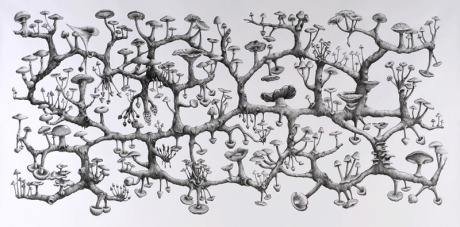
Life has always seemed to me like a plant that lives on its rhizome. Its true life is invisible, hidden in the rhizome. The part that appears above the ground lasts only a single summer. Then it withers away--an ephemeral apparition. When we think of the unending growth and decay of life and civilizations, we cannot escape the impression of absolute nullity. Yet I have never lost the sense of something that lives and endures beneath the eternal flux. What we see is blossom, which passes. The rhizome remains.

http://resources21.kb.nl/gvn/VGM01/VGM01_s0195_X.JPG

The rhizome is not Platonic in any conventional sense. This is no pie in the sky after you die. This is not a transcendence completely detached and aloof from the immanent flux. Like all roots it is directly and of necessity linked to its shining and fading blossoms. In fact, it is the above ground growth that absorbs the energy which the rhizome needs to sustain itself. The First Cause is intrinsically dependent on manifestation. The egg hatching the hen laying the egg.

Deleuze and Guattari borrow and adapt Jung's idea:

The rhizome is an accentered, nonhierarchical, nonsignifying system without a General and without an organizing memory or central automation, defined solely by a circulation of states.

http://www.rizoombv.nl/UserFiles/Afbeeldingen/Over-Rizoom/richard-giblett-mycelium-rhizome.jpg

This tells us a little bit more. No centre. No hierarchy. Signifying nothing. A tale told by an idiot. Such is the "ephemeral apparition," full of sound and fury, but such also is the rhizome. Within it the vital juices never cease to cycle. And yet the General does not swim here either. He is not to be found. He is complete ephemerality.

A new politics is arrived at. A deep anarchy in which even the notion of politics is squeezed down to its greasy essence and it too is circulated endlessly. A slurpy, juicy politics where there is no ground to "take a stand." All are left floundering.

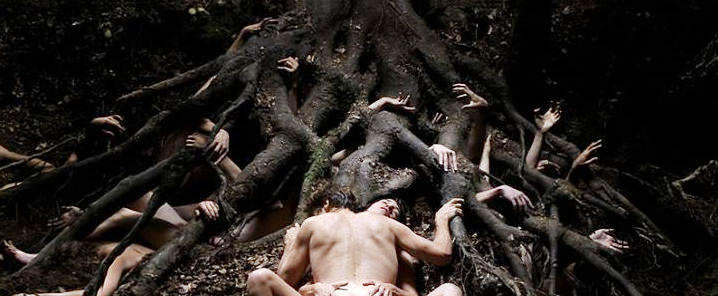
This blog has concerned itself too much with trees, with verticality. One Tree and then Two Trees and the life and knowledge that comes from trees. There is a very different, horizontal logic in the rhizome. No King sits on the Throne. Of course, the process is the same but the metaphors are very different. And metaphors are all we have to go on.

http://www.aceshowbiz.com/images/still/antichrist01.jpg

Trees grow from this root system, but without the periodic flowering of trees the roots would also die. Yet all trees extend down to the roots. Only certain trees, certain blossoms, open up to the light. In the rhizome these all "exist" in potential at once. All plots, all colours, all scents, all metaphors, all archetypes. Everything in circulation -- melding, flowing apart, in simultaneity. This is the absolutely synchronous. Space and time at a single point which is not a point. Points are fixed and this never is.

Every Time less than a pulsation of the artery   
Is equal in its period and value to Six Thousand Years;           
For in this Period the Poet’s Work is done; and all the great   
Events of Time start forth and are conceiv’d in such a Period,   
Within a Moment, a Pulsation of the Artery.   

http://mlkshk.com/r/4N01

Within the pulsation of an artery all civilizations grow and decay. So realized Blake. So realized Milton. So realized Dante and Virgil and Homer. Rome falls nine times an hour. Here is a vast tree that, in times of great thirst, shrinks down to its roots for further nourishment and inspiration. But all magic happens on this level. Hierarchies are always just projected illusions. Odysseus has not yet been cast off the Mountain.

Inspiration and conspiration thus occur at the same location. Swept up in the flows of blood and sap. Anything above the ground is an apparition. Vast pageants, a whole year of ritual, signs and wonders, wars and rumours of wars, digital banality, fish, the end of the world -- mere seasonal foliage. And yet it is all required. Photosynthesis. Structures built of words, of spirit calcified into letters, melt when the foundations are shown to be just as transitory, just as shaky, as everything else.

http://www.midorisnyder.com/.a/6a00e54efdd2b38834017ee5ad48a9970d-500wi 

The Six Thousand Years are up. One pulse. One year has passed and the poet has hardly done anything. Pointless pecking. Pointfullessness. But never sour grapes.

I have met with you, bird, too late, or if not, too worm and early...

http://uploads.neatorama.com/images/posts/670/61/61670/1368443011-0.jpg

Sunday, June 30, 2013

Cockpit 731


Frostbite and Fleas


In mid-May a photo of Japanese Prime Minister Shinzo Abe posing in the cockpit of a T-4 training jet sparked widespread outrage in South Korea and China. Why? The concern came with the number clearly marked on the side of the plane: 731.

Most people in the West place no particular significance in this number, but for many living in Asian countries subjected to Japanese invasion and occupation before and during the Second World War this number recalls only one thing. Memories of the abject evil that was the Epidemic Prevention and Water Purification Department of the Kwantung Army, better known by its less Orwellian moniker  -- Unit 731, still haunt the present.


This facility, located just outside the Manchurian city of Harbin, was a covert research centre run by the Imperial Japanese Army for the development of biological and chemical weapons. Unit 731 was headed by the monstrous Lieutenant General Shiro Ishii -- a man who almost makes Josef Mengele look like Dr. Feelgood.

A History Channel documentary, Unit 731 -- Nightmare in Manchuria, chronicles a number of the experiments/atrocities authorized and conducted by General Ishii and crew. These include bombing Chinese villages with plague ridden fleas, performing live vivisections on prisoners who had been intentionally infected with various diseases, exposing the skin of live prisoners to extreme cold in order to study the effects of frostbite, and on and on.

http://www.cinaoggi.it/images/731/731-victims-034.jpg

To this day, nobody is certain how many thousands of people were tortured and killed either in Unit 731 or as victims of its "field experiments."

Despite this particularly dark episode of the WW2 era being not widely known in the West, in Northeast Asia it is as notorious as the Nazi death camps. This makes it all the more surprising that Prime Minister Abe would pose for a photo op sitting in the cockpit of fighter jet 731. A Korean politician likened this action to "German Chancellor [Angela] Merkel riding an aircraft with the Nazi swastika." But it is really worse than this. To be truly comparable Merkel's hypothetical jet would have to be branded "The Auschwitz."


So what the hell was Abe thinking? An official spokesperson for the Japanese Ministry of Defense dismissed the whole incident as being purely coincidental. "There was no particular meaning in the number of the training airplane the prime minister was in on Sunday. Other than that there is nothing we can say." A coincidence? Could this be true?

This is where Abe's action becomes a singularly fascinating case study for the purposes of this blog.

Comfort


If this is only a meaningful coincidence, or synchronicity, then it indicates a definite dark side to a phenomenon which many consider to be wholly and intrinsically benign. This particular synchronicity, if it is such a thing, has had the effect of ratcheting up tensions in a region already beset with territorial disputes, most notably the Senkaku Islands. Assuming, as many do, that the phenomenon of synchronicity contains a conscious component then why would it choose to further fan the flames of mutual mistrust?

http://www.asianews.it/files/img/CINA_-_GIAPPONE_-_ONU_-_SenkakuDiaoyuRT.jpg

If, on the other hand, elements within the Japanese government intentionally sat Abe in training jet 731 in order to provoke its neighbours then this is a clear example of a high level conspiracy involving the use of symbolism. And, if this has occurred here, there is a good chance that similar manipulations of symbols happen all of the time.

Certain people interested in synchronicity tend to dismiss or ignore both such possibilities. Synchronicity is viewed as being largely auspicious and what other researchers take to be symbolic or esoteric conspiracies are explained away as synchronicities. There are no conspiracies. There are only the mysterious, interconnected workings of the universe. And the universe is good.

A third possibility exists -- the incident is a purely random, fully unconscious coincidence. Like the Ministry spokesperson said, there is no particular meaning in this action. This possibility is also unpalatable for many. If there is no real significance in the plane's number, and any "meaning" found in it is only a projection, could it also be the case that all "synchronicities" are really only coincidences? To admit this is to begin to accept that life is essentially random and meaningless.


None of these three are especially hopeful. Of the three, though, perhaps the best case can be made for intentional manipulation. The Japanese government is consciously using 731 in order to provoke its neighbours. Two other recent incidents appear to confirm this.

Prime Minister Abe, the grandson of former Prime Minister Nobusuke Kishi who was -- like Shiro Ishii -- an unconvicted probable war criminal, is an arch conservative whose chief desire is to jettison Japan's "pacifist" constitution, crafted by General MacArthur after the war. Abe's main target within the constitution is Article 9, the clause which limits Japan's military to self-defense.

http://ocw.mit.edu/ans7870/21f/21f.027/protest_art_50s_japan/image/anp3018_Ishii_100_det110456.jpg

To alter this clause, though -- which would startle and completely piss off its neighbours, Abe's government first needs to revise Article 96. This clause requires that any change to the constitution needs to be supported by a two-thirds majority in both houses of parliament as well as the majority of votes in a public referendum. In other words, constitutional change is designed to be very difficult. Abe must somehow revise Article 96 (how?) if he wants to push through the meatier reforms he truly craves.

This is why alarm bells also rang across the region when Abe was given and put on a number 96 baseball jersey during a recent game in front of 46,000 fans and the media. Again, he denied any real significance in this action.


A further provocation came from Toru Hashimoto, the right-wing mayor of Osaka, who also in May caused intense dismay when he claimed that the so-called "comfort women" -- thousands of sex slaves abducted from across Asia to service occupying Japanese troops during the war -- were "necessary." Hashimoto is not a member of Abe's government, but the two share the same hard right-wing objectives. Once again, though, the government conveniently distanced themselves from Hashimoto's outrageous remarks.

http://i46.tinypic.com/15ygnwz.jpg

It definitely seems that Japan is trying to provoke and it is using the most heinous symbols possible to do so. Abe, though, goes even further. The whole basis of his much-flaunted economic policy -- "Abenomics" -- is based on gradually inflating the Japanese money supply. Japan hopes to make its exports more attractive than its competitors -- a classic "beggar thy neighbour" move.

There are real indications, though, that this will not work. Japanese government bonds do not appear as the safe investments they once were. This whole process could easily fly out of control and the country be drowned in its massive debt. It has been suggested that the government is well aware that this policy might fail, and that one of the big reasons that Abe wants to change the constitution is to enable the government to suspend civil rights in the event of economic and social unrest.


Abe's government, as with the current governments of North and South Korea and China, is firmly militarist and authoritarian. Tokyo, while acting innocent, is using potent symbols like 731 and the "comfort women" in order to incite an eventual response from its equally xenophobic neighbours.

Serious Numbers


It is well-known that the region is sensitive to the meaningful occurrence of certain symbolism. The recent success of Finnegans Wake in China is a partial indication of this. One such "coincidence" on June 4th of last year caused a major stir within the global Chinese community. From the New York Times:

HONG KONG — Maybe it was just a coincidence, but when the Shanghai Stock Exchange fell 64.89 points on Monday — uncannily echoing the date of the Tiananmen Square crackdown on pro-democracy students on June 4, 1989, exactly 23 years earlier — the Chinese blogosphere went into a tizzy.

http://www.csmonitor.com/var/ezflow_site/storage/images/media/content/2012/0604-tienanmen/12734819-1-eng-US/0604-tienanmen_full_600.jpg

Not only did the blogosphere erupt, but the Chinese government hastily acted to censor all reports of this on the web. China is "a nation where numerology is taken very seriously," and Abe's government would definitely be aware of this.

If the Tiananmen/Stock Exchange wink, though, was an unplanned synchronicity, and it is hard to imagine that it was anything more or less than this, then is it in the realm of possibility that fighter jet 731 was also a sync? Yet if we accept this then what, apart from fanning the embers of possible conflict, would be the point of it? If synchronicity is a means of the universe to attempt to highlight a part of itself then why deal out the gruesome number 731? The Shanghai Stock Exchange numbers are a small blow against tyrannical repression, but what is 731 saying?

http://cryptome.org/cn/tk/pict503.jpg

It could be that synchronicity itself is at times a dark phenomenon. In this case, if we accept that it is a sync and not a conspiracy, it appears to "want" international tensions to rise. Is there any other way to interpret this? To consider this fully we must extend the story forward in time and well beyond Asia.

X Generation


The real tragedy of Unit 731 is that Shiro Ishii and many of the other officials directly responsible for the atrocities committed did not face justice. Instead, they cut deals. The US government was extremely interested in the results that Ishii had accumulated. Information is power and Unit 731 had inhumanly yet scientifically gathered information, the affects of chemical and biological agents on live human specimens for example, that was difficult to attain in any other way. The US sacrificed justice for dark knowledge.

It may be, however, that the US went much further than this. Operation Paperclip, the recruitment of Nazi scientists by the US after the war, is by now commonly known. It is likely, though, that Japanese scientists, including or perhaps especially those from Unit 731, were likewise brought to the US to continue their experiments.

https://fbexternal-a.akamaihd.net/safe_image.php?d=AQCGxvvZzUZZvAkG&w=720&h=581&url=http%3A%2F%2Fupload.wikimedia.org%2Fwikipedia%2Fen%2Fthumb%2Fa%2Fa0%2FRocky_Mountain_Arsenal_south_entrance.jpg%2F720px-Rocky_Mountain_Arsenal_south_entrance.jpg

The Stench of Truth blog points out that very near Aurora, Colorado, the site of last year's Dark Knight shooting, was the former Rocky Mountain Arsenal, a US chemical weapons facility which hosted Japanese scientists with ties to Unit 731. Such arrangements are not likely to have been exceptional.

If this all sounds familiar then maybe it is because similar themes were presented in a two-part episode of The X-Files in 1995. These episodes were titled "Nisei," Japanese for "second generation" -- children born to immigrants outside of Japan, and "731," obviously referring to Unit 731. In the Secret Sun, blogger Christopher Knowles has briefly outlined the plots of these episodes and placed them within the context of the greater X-Files mythology.  

Without getting into the details of these episodes (they can be watched online here and here) it is sufficient to say that they involve the idea that Japanese scientists, directly brought to the US from Unit 731, have for two generations continued their sinister biological and chemical experiments on live prisoners.

http://xfphotos.fredfarm.com/season3/731/cap149.jpg

This would be shocking enough, but the dark weirdness only begins here. Agent Scully discovers that she has likely been abducted -- in classic alien fashion involving an operating table, bright lights and implanted devices -- by the same group of Japanese scientists, and that this nasty bunch has continued to infect captured individuals with horrific diseases up to the present day.

Agent Mulder, though, concludes that this US Unit 731 has the ultimate aim of creating human-alien hybrids. The chief scientist of the facility uses the names Dr. Takio Ishimaru and Shiro Zama, which are easily combined to form Shiro Ishii.

The story is fiction, one hopes, but it raises very profound questions. Have wartime covert facilities and programs like Unit 731 continued on, widening their scope and deepening their depravity, up to the present? To what extent can the purported alien abduction phenomenon, including inter-species mating and breeding, be traced back to these secret government programs? And, perhaps most crucially, is there or is there not a truly alien presence involved?

https://blogger.googleusercontent.com/img/b/R29vZ2xl/AVvXsEhPlRrNXpoShU75CNW3kP0FVRC6n-bv-Fnc3f9ztOhmW0UWVWb8pZ5xl4WCtN9oBXrXu61g8EHPxKmmk63YVLCK-FbAZyVKL7vg9F8baDMIDpBoYJmW7psoVJ7IBzSvIKuA5YGSvY5-zM37/s400/abduction+5.jpg

Away and Beyond


Almost exact parallels to the abduction phenomenon are found within various cultures throughout history. Recently I have been reading Writings on Irish Folklore, Legend and Myth by poet W. B. Yeats. Throughout this book, largely exploring Irish peasant folklore on fairy encounters, are numerous passages that read like something out of the research of John Mack. The following is from Yeats's essay "Away" from 1902:

There is, I think, no countryside in Ireland where they will not tell you, if you can conquer their mistrust, of some man or woman or child who was lately or still is in the power of the gentry, or“the others”, or “the fairies”, or the sidhe”, or the “forgetful people”, as they call the dead and the lesser gods of ancient times. These men and women and children are said to be“away”, and for the most part go about their work in a dream, or lie all day in bed, awakening after the fall of night to a strange and hurried life.

http://api.ning.com/files/DzJ2RldVTYrgzX6Dm90KbCnKO5FlfYgwewBGfhas2AHvohwzBU3Sopicya0snc47/FairyWelcomeHome.jpg?width=445&height=344

Yeats notes in the same essay, and throughout his work on the subject, that the experience of being taken "away" by the fairies is largely ambiguous. Depending on the case there is a range of responses to the experience from wholly negative to entirely positive. This also jibes with the accounts of abduction "experiencers." Yeats writes:

Sometimes one hears of people "away" doing the work of the others and getting harm of it, or no good of it, but more often one hears of good crops or of physical strength or of cleverness or of supernatural knowledge being given and of no evil being given with it except the evil of being in a dream, or being laid up in bed or the like, which happens more or less to all who are "away".

Obviously 1902, and following an age-old tradition in Ireland, is long before most people considered the reality of flying saucers and/or space aliens. This doesn't mean that the "fairies" were not from outer space, but certain aspects of these stories are clearly different. The fairies are said to usually come from the earth, not from the sky, and are traditional, not hyper-technological.


It has been argued convincingly, however, by people like Jacques Vallée and John Keel, and more recently by Graham Hancock and Patrick Harpur, that the same phenomenon is better described as being "extra-dimensional" (although even this seems inadequate). It is shape-shifting, morally ambiguous, and it takes on the guise and expectations of the human culture it encounters. The UFO is, accordingly, scientific, technological and global.

Every grove, glade and dell on the face of this planet may have been mapped and surveyed, but in space the imagination can still freely soar.

http://www.explorecrete.com/crete-pictures/crete-sky-stars/fullsize/2image003_fs.jpg

And it is the imagination which is key here. Yeats discovers in his interviews with Irish peasants that the fairies are everywhere. They are found in the landscape, in animals and plants, in food, in objects, in books and in the word itself. The latter brings us very close to the experiences of Terence McKenna and Philip K. Dick. Information itself is the "Other."

Words, numbers, symbols, images are expressions of our own imagination, both individual and collective. The alien or fairy intelligences may not be able to be entirely reduced to living, autonomous figments of our imagination, but clearly they also have this aspect. Yeats often emphasizes that the fairies are able to grant humans spiritual insights but that they seem to require our physical vitality. A very similar thread is found in abduction accounts. In both narratives, it appears, spirit desires to wed with matter.

http://www.thetoddanderinfavoritefive.com/wp/wp-content/uploads/2012/07/Fairy_changeling.jpg

Scooter 731


Synchronicity, also bridging mind and matter, is obviously one area where these "beings" attempt to make contact. And this brings us back to Unit 731. Shiro Ishii and the commanders of this centre may not have been space aliens, but they were indisputably inhuman. One wonders if there were "sinister forces" that directed and inspired men like Shiro Ishii and Josef Mengele, dark spirits that make their homes in places like the Rocky Mountain Arsenal, Auschwitz and Unit 731. Was it these forces who also positioned Abe into the cockpit of jet 731?

The question of synchronicity or conspiracy begins to become muddled at this point. Conspiracies are built on synchronicity just as synchronicities stem from conspiracy. There is a conspiracy of synchronicity. And synchronicity is living information, is the aliens, is the fairies, is our imagination made manifest in a reality of dream. The Irish country folk believed that the fairies could be very good or very evil. The "gentry" were also adept at concealing their true alignment altogether, of tricking and deceiving. Is the imagination any different?

As I was working on this post I realized that my next-door neighbour's motor scooter, which is always parked right outside my door, has 731 as its license plate number! Maybe it is all just coincidence.

Wednesday, June 12, 2013

Mantis

Mingling their mumblings with his own mastications, thousands on thousands of sharks, swarming round the dead leviathan, smackingly feasted on its fatness. The few sleepers below in their bunks were often startled by the sharp slapping of their tails against the hull, within a few inches of the sleepers' hearts. 

http://violdam6.files.wordpress.com/2012/07/pdvd_024.jpg

Is there still any up or down? Screams from the sea. The feeding frenzy on the corpse of the Creator in full glutinous glee, even now. This all happens an inch from the heart. Do the sleepers awaken or are they also consumed in mid-slumber by the sharks?

Creation, though, rolls on. How did it emerge? Whose signature does it bear? Questions only asked by those who for a moment cease to snore. And snoring is working.

Really, everything we see is mysterious and incomprehensible. A tiny midge and a huge elephant, a caressing breeze and a blizzard, a young tree and a rocky mountain - what are all these? What are they, why are they? We incessantly ask ourselves, but we may not speak out. For philosophy is ever pushed aside to make room for the daily needs. Only those think who are unable to trouble about self-preservation, or who will not trouble, or who are too careless: that is, sick, desperate, or lazy people. These return to the riddle which workaday men, confirmed in the certainty that they are right, have construed into "naturalness." 


The elephant, the whale, the mountain -- all set upon by storms of wind, wave and fire. But the mystery is the storm, the frenzy. It is also the workaday. Mountain held up by Tree. Blood flowing with the sea. The dream dreams the dreamer. The sick are on fire.

Fire is not dependent upon fuel.
Fire is not independent of fuel.
Fuel is not dependent upon fire.
Fuel is not independent of fire.


Burn it all down. Who burns? What is burning? Leviathan stirs awake. Who is he? He creates enigmas.

He's of Lantern-land stock and has a head full of whimsies. He's the standard-bearer of the Ichthyophagi, the dictator of Mustardland, a whipper of small children, and a burner of ashes. He's the father and patron of physicians, and he's all over pardons, indulgences, a solemn masses; a worthy man, a good Catholic, and thoroughly devout. He weeps three parts of the day, and never attends a wedding. But I must admit that he is the most industrious manufacturer of larding-sticks and skewers in all the forty kingdoms.

http://photos.foter.com/26/lord-brahma-and-adhiti-19th-century-illustration_l.jpg

The whipper of small children. All existence in thrall to extremes of mania and paralyzing self-absorption. Ichthyfailing. The lantern falls and sets the whole world ablaze. Rioting below the deck. The tree is cut down and the mountain slides into the ocean.

As for this fragrant tree, no mortal is permitted to touch it till the great judgment when God's justice redresses all and brings everything to its ultimate consummation. The tree shall then be given to the good and holy. Its food shall be food for the elect. It shall be transplanted to the holy temple of the Lord, the eternal king. 

http://www.girlonawhaleship.org/artifacts/views/life_forecastle.jpg
 
Even the sharks are devoured by a school of countless minnows. Nibbled to death. The good and holy? The horizon erased. Poets are forced into exile. Titans sentenced to the underworld. In the hour of consummation, but nobody seems to notice. Senseless smiles on screens reflecting screens. It's a gas gas gas.

let's admit it: the giants are gone and there have not come up any giants to replace them. maybe it is this time. maybe it is this Vietnam time, this African time, this Arabian time. it could well be that the people want more than the poets are saying. it could well be that the people will be the final poets -- with luck. god knows, I don't like the poets. I don't like to sit in the same room with them. yet it is hard to find what one does like. the streets seem lacking. the man who fills my gas tank at the corner gas station seems the most heinous and hateful of beasts. and when I see photos of my president or hear him speak, he seems like some big fattened clown, some dull and putty-like creature given my life, my chances, everybody else's to decide upon. and I do not understand it.

http://www.freerangelongmont.com/wp/wp-content/uploads/2010/09/troll-sxc-165321_3545-bw.jpg

It can't be understood. Compulsive mastication. But we do not speak out. Do we want more than the poets? Heads full of whimsies. In our hearts, in the temple, the death throes of the most heinous and hateful of beasts. And it is us. And it is not us.