Showing posts sorted by date for query orc. Sort by relevance Show all posts

Sunday, January 19, 2020

Snatches of the Everlasting Gospel 3

 https://blogger.googleusercontent.com/img/b/R29vZ2xl/AVvXsEjdNcpxZh71l2jCbTs7-nYBJmgvJTJrPf4wq2oyZ_7AbYvqESjZ94wqaJOKAPexY3gBRlHz2aFVqubZU16pxnLZA5Stldzuq27KqH_2v5OpMC9ltWVEBBELPOwk_wVMvEwZxgXxOpg8Cxg/s1600/B_Osma_145v.jpg

The Albigensian communities of southern France were exterminated by armies of Crusaders. But individual Cathars manage to escape from Provençe and to carry their Bogomilism to every part of Europe. Apparently less sectarian than many earlier or later radicals, the Manichean Cathars form friendships and in time merge with Humiliati, Waldensians, Joachites, Brethren of the Free Spirit and others with whom they share the distinction of being hunted by the Inquisition. They do not merge with Franciscans, recognizing these pseudo-resisters as kin to the Inquisitorial Dominican police...
The radicals are numerous, many are highly imaginative, their inspiration comes from distant places and times, and they stimulate each other to rethink their commitments and start all over again. They are as varied as human beings can be. They nevertheless share some large commitments, and it is these commitments that make them anathema to ecclesiastical and lay authorities.
The radicals are explicitly committed to freedom and to community. The very names they give their informal groupings, names like Brethren of the Free Spirit, announce both of these commitments. -- Against His-story, Against Leviathan!, Fredy Perlman 

Joseph Campbell in Creative Mythology points out that in the 11th and 12th centuries there was a resurgence in the veneration for Love and Beauty across the Eurasian landmass. This ranged from Japanese Buddhist courtly love depicted in Lady Murasaki's writing, to Taoist inner physiological teachings in China, to Tantra and other Bhakti cults in India, to hymns of praise for the Beloved in Sufism, to formulations of the Shekinah in the Kabbalah, and to the troubadour movement and the cult of the Dame in Provence.

Alongside and somewhat in coordination with these groups in Southern France were the much more established Cathars or Albigensians, representing a true parallel or counter-Church in Europe. The Cathars are usually regarded as a form of gnostic-dualist Manicheanism, their roots extending back to the Bogomils and to earlier Gnostic sects of southeastern Europe and the Near East.

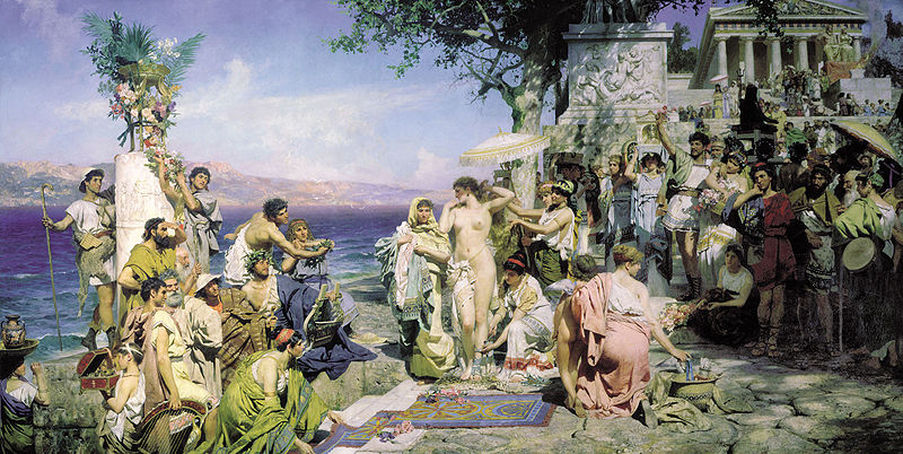
However, certain researchers -- like Gabriele Rossetti on the Left and Ezra Pound on the Right -- have speculated that the Cathars were a radical and functioning survival of the Eleusinian Mysteries. In Albigensianism, the argument goes, the esoteric and erotic fertility rites were perpetuated in Western Europe.
https://ionamiller2017.weebly.com/uploads/1/0/4/2/104201605/cathars_orig.jpg

In any case, the Cathars posed an existential threat to the official Church's claim of universalism. Accordingly, they were nearly all exterminated in the 1209 to 1229 crusade against them. The anarchist anti-historian Fredy Perlman picks up the thread here precisely where it was dropped by the sanctioned narrative. Many individual Cathars escaped these bloody assaults and formed alliances with other, even more radical, heretical and dissenting groups of that time. Of these one of the most revolutionary groups was the Brethren of the Free Spirit.

Life Immediately Present


Viewed as historical documents, they establish beyond all doubt that the ‘Free Spirit’ really was exactly what it was said to be: a system of self-exaltation often amounting to self-deification; a pursuit of a total emancipation which in practice could result in antinomianism and particularly in anarchic eroticism; often also a revolutionary social doctrine which denounced the institution of private property and aimed at its abolition. -- The Pursuit of the Millennium, Norman Cohn

Academic historian Norman Cohn is no fan of the medieval antinomian and communist groups that he writes about, and Perlman calls him reactionary in his politics. But his distaste seems to keep his depiction of them non-romanticized. The affirmation of "total emancipation" was real. Their doctrine was virtually Tantric, although of an entirely divergent point of origin.

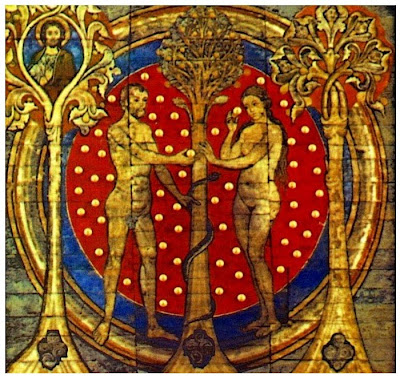
The heresy was as such: As Christ had come and died and rose again for the sake of all humanity, then all sins -- past, present and future -- were forever forgiven and the Fall was reversed without a trace. All of nature was redeemed by the Incarnation. The body was no longer blemished, to be held in scorn, but to be celebrated as being holy along with all of its desires. All authorities, all laws, all bounds had been overthrown. Heaven had once again descended to Earth.

The secular and ecclesiastical centres of control were illegitimate, therefore, having lost all divine justification for their rule. They could be dismissed and ignored and resisted at every turn. The Free Spirits had reentered the Garden, had been restored to sinless innocence, and had become like gods -- partakers of both the fruit of the Tree of Knowledge of Good and Evil and the Tree of Life. There was no need to abolish God -- the misguided aim of later revolutionaries -- because they, and all of Nature, were eternally at one with God.

https://i.pinimg.com/originals/28/d8/d6/28d8d63c8ba1e37294ed02817dde07a4.jpg

Like the Tantrics and revolutionary Taoists, such as the Yellow Turbans and subsequent Taoist-inspired peasant revolts, the Free Spirits were not exactly anti-materialists -- Matter was not dead and fallen but instead was blessed and spiritual. The wholly Transcendent had become wholly Immanent. Christ had already wed Heaven and Earth. The Brethren of the Free Spirit were merely those who had realized these things first and fully. It continues to be the most radical heresy or revolutionary doctrine imaginable. The former Situationist Raoul Vaneigem also celebrated these ideas:

All the supporters of the movement of the Free Spirit insisted that life meant life immediately present. There was no hell, no resurrection, no Last Judgment, no divine overseer, no secular power. They were not interested in religious, philosophical or political quarrels; social confrontation interested them only when it opened the door to absolute emancipation. Realizing that God had been created in the image of their alienation, they abandoned the great external, productive subject, whose spirit signified servitude and tyranny, and made themselves earthly gods in the ceaseless flux of a universal attraction they called love. To pass, through love, from the frustrated nature of desire to the untrammeled freedom of re-created nature -- this was the project they shaped during those centuries shut off from the progress of history. -- The Movement of the Free Spirit, Raoul Vaneigem

They "made themselves earthly gods in the ceaseless flux of a universal attraction they called love." And in this they carried forward a great idea that can be traced back through the more liberated of the Christian mystics to the Neoplatonists and their commentaries and meditations upon the doctrines of divine Eros found in the Phaedras and the Symposium. These doctrines are reflected in Gnosticism and earliest Christianity, doctrines which are truly archaic and even Paleolithic in origin -- from the cosmic/chaotic Mother and her consort/son Love.

Loomings


And stretching forward in history, the Brethren of the Free Spirit and contemporary heretical groups, as Vaneigem and others have traced, went on to engender and inspire anti-authoritarian Reformation sects like the neo-Adamites and the Moravians, the esoterically-focused Rosicrucians, the more radical of the English revolutionaries like the Diggers and the Ranters -- who explicitly named their antinomian beliefs "the Everlasting Gospel" -- and the socially radical Freemasonic fraternities at the time of the American and French revolutions. Yet all of these groups were conscious of a deeper tradition, one that inspired visions of total liberation.

However bizarre it may appear to later revolutionaries and historians alike, this Pythagorean passion seriously influenced the organizational activities of the first revolutionaries. We have seen how the Illuminists made the first halting efforts systematically to use the forms of occult Masonry for ulterior conspiracy -- pointing the way to Bonneville, Buonarroti, and the early professional revolutionaries. But the wild profusion of exotic symbols and higher orders also fed a much broader and more open impulse: the search for simple forms of nature to serve as a touchstone for truth amidst the crumbling authority of  tradition. -- Fire in the Minds of Men, James H. Billington

The word "Illuminists" instantly rings warning bells in the brains of millions in these addled and ignorant days, but in fact the Illuminati were extreme foes of the Church and the monarchies that had kept the population of Europe in feudal enslavement for centuries. Whatever excesses they were involved in, to be condemned in themselves, they were at least on the right track.

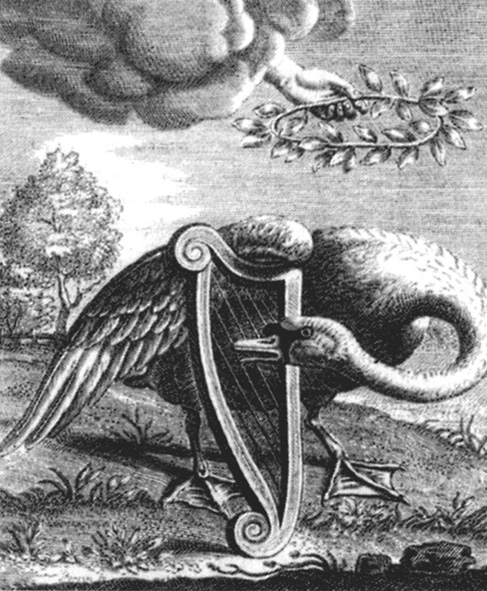
Yet in contrast to the established authorities of tradition that they and other revolutionary groups of the that period opposed, they affirmed and identified with an underground tradition, nicknamed the Everlasting Gospel here, which they tracked at least as far back as the communal and anti-tyrannical Pythagorean and Orphic brotherhoods. As they toiled to further crumble the existing oppressive traditions, they sought to replace these with the oldest revolutionary faith.
https://www.andrewcollins.com/pics/fig.%2024.1.%20singing%20swan%20copy.jpg

As the devaluation of all values continued apace, however, the authorities did something cunning and diabolical. Knowing that their long stretch of duping the population through strictly regimented orthodox Christianity and feudalism was fracturing, they formed alliances and eventually fused with emergent bourgeois capitalism and its associated ideology of scientific materialism.

It was far better for these authorities to have God removed entirely from the world, to de-animate or de-soul the Earth, than to allow for the spread of an entirely immanental Free Spirit-style affirmation of a decentralized yet universal "Church" of pagan-Christian animistic pantheism.

The real Renaissance, in this regard, ended symbolically in 1600 with the burning at the stake of arch-heretic Giordano Bruno in Rome. Soon after this execution came the devastating Thirty Years War and the expansion of the brutal Counter-Reformation and Inquisition (with equivalent established Protestant institutions), and the subsequent rise of the modern State, capitalism and scientific materialism.

The revolutionary groups of the next two centuries, although still partially aware of their deeper roots, were already becoming watered down through Deism and afterwards atheism. The so-called "Enlightenment" can be seen in one sense as a social and spiritual reaction to the resurgent Hermeticism of the Renaissance.

Jesus I. Christ


Certain visionaries of this later period, inspired by the political and social revolutions of America and France, resisted this turn to Deism and "Natural Religion." The most notable of these was the English poet and artist, William Blake, a direct inheritor and re-activator of the Everlasting Gospel, writing explicitly about the old tradition.

If it were not for the Poetic or Prophetic character the Philosophic & Experimental would soon be at the ratio of all things, & stand still, unable to do other than repeat the same dull round over again. -- “There Is No Natural Religion,” William Blake

The "same dull round" potentially means several things for Blake here. In its most basic sense it means the quotidian dose of largely senseless toil and exertion that most of us, under present economic and social conditions, suffer perpetually. This includes the non-stop alienation of commuting, working, consuming and worrying about the financial well-being of ourselves and those we love. The serfdom of the daily grind, in other words, is still as soul-deadening for us as it was for Blake and his contemporaries.

In a deeper sense, though, it refers to the "natural religion" of rational philosophy and materialist science. It is Blake who best articulated in poetry and prose and in the visual arts how the so-called "Enlightenment" and its legacy was really a Disenchantment; how "single vision and Newton's sleep" had devalued the senses, debased the body and its desires, transformed nature herself  into a endless grey and smoky series of  "Satanic mills," and in particular had suppressed and strangled the Imagination, which before had provided a spiraling staircase to the gods.

https://steemitimages.com/p/2gsjgna1uruvUuS7ndh9YqVwYGPLVszbFLwwpAYXZpnTbRLbq3UA7hc1qcian5GX9zkvtpSAkX15Kz78T5Yz92bsUFiNsCTqEWVxoDye8ExHLE4W8N?format=match&mode=fit

Henceforth only rationality and the experimental method of mechanistic science, presided over by a new yet equally exclusive priesthood of scientists and technicians, would be accepted as providing an effective path to Truth. "Art" became mere entertainment, even in its most "radical" form now only reflecting the nihilism of its culture, no longer a means of transcendence in immanence.

Blake attempted to break out of this prison of  "the ratio of all things" by creating his own mythology, in conscious continuance of Gnostic and Hermetic myth, and succeeded in keeping the light of the Everlasting Gospel from being extinguished in the 19th century, allowing it to keep burning in the 20th century and beyond.

But the same dull round also refers to the cycle of revolution, which Blake came to call the "Orc" cycle. Orc is the young and fiery spirit of revolution who nonetheless, as he grows older and more established, hardens his revolt into a new oppressive authority. Inescapably he transforms into his arch-nemesis, Urizen. This is what Blake, a friend of the revolutionary Thomas Paine and an associate with the anarchist writer William Godwin and his early feminist wife Mary Wollstonecraft, witnessed happening during the course of the American and French revolutions.

The same deadly and soul-smothering Order just returns again and again, usually in an even more violent and insufferable form. The Orc cycle provides the clockwork mechanism for the entire nightmare of history, entirely in lockstep with "natural religion." King and priest, the Archons of Space and Time, are merely reproduced under different titles and dress. To cut through this cycle or round, however, something far deeper needs to occur. Revolution is not sufficient, it must lead to Revelation. Each revolt must provoke a revealing. But a revealing of what?

All laws must be overthrown, without and within. The extermination of the national tyrants of this world is incomplete unless the shackles which bind our own imagination are shattered. For Blake, a very conscious torch bearer of the Everlasting Gospel (a term which critic A.L. Morton explains Blake consciously adopted from the communist radicals of the English Revolution, who in turn took it from the Bible), it is through Christ alone that this may be accomplished.

Blake calls Christ, "Jesus the Imagination" and in his poem "The Everlasting Gospel" he writes that the highest teaching available is the personal forgiveness of sins. Through Jesus the Imagination, always fully present within our own imagination, we are able to both forgive others and to be forgiven. All codes, restrictions, hierarchies are, through this, split right through. They are negated, circumvented, ignored and the forgiving power of the Source attained directly.

In this way, Blake is overtly invoking the Third Age of the Holy Spirit, pronounced by Joachim of Fiore, in which Christ's Incarnation and Resurrection has already liberated the entire world from Sin and Death so that all existing authorities have been made obsolete. As we have seen, this is also the central belief of the Brethren of the Free Spirit and their successors. Blake carries this medieval antinomian heresy forward, a heresy which becomes central to the Romantic era.

http://sahajayogaencyclopedia.org/images/7/75/Joachim%2Bcircles.jpg

And ultimately this heresy also implies that ending the "same dull round" can be equated with liberation from saṃsāra, the cosmic wheel of birth and rebirth, an Indian doctrine which Blake might have had some familiarity with. Though as in Mahayana Buddhism, where the final realization is that saṃsāra is nirvāṇa, Blake also held that the radical and imaginative alteration of perception is the key to the realization that this world, with its endless beauty and mystery, is already Paradise.

 The Pewless Church of Poetry


From Valentinus through the German Romantic poet Novalis, the French Romantic Nerval, and the English William Blake, Gnosticism has been indistinguishable from imaginative genius. I venture, after a lifetime’s meditation upon Gnosticism, the judgment that it is pragmatically the religion of literature. There are, of course, nonheretical Christian poets of genius, from John Donne through Gerard Manley Hopkins on to the neo-Christian T.S. Eliot. And yet the most ambitious poets in the Romantic Western tradition, those who have made a religion of their own poetry, have been Gnostics, Shelley and Victor Hugo on to William Butler Yeats and Rainer Maria Rilke. -- Genius, Harold Bloom

Harold Bloom -- another imperfect messenger; Hermes Quicksilver may take on any semblance or guise -- extends the line further ahead to Blake-inspired Romantic writers to the Modernists and beyond. Gnosticism is the secret religion of literature.

There is of course no formal Gnostic religion. Even during its heyday in the Hellenic period there existed dozens of, at times, rival Gnostic sects but no single all-encompassing Church. The rites and doctrines of these sects differed from one another, but a defining similarity was the application of essentially Platonic/Neoplatonic philosophy to Jewish, Christian and creative-syncretic mythologies.

"Gnosticism" has come to represent a spiritual ideology which is dualistic at core, one that reveres the purity of the Spirit and reviles the body, the Earth and the realm of Matter in general, to the extreme that the Creator God of this material universe is denied and denounced as a cosmic tyrant. Likewise, for the Gnostics, the authorities of the Church and State, deriving their power from this false God, were rejected as being illegitimate and worthy of derision. The Gnostics were the original an-Archon-ists, anarchists. "No gods, no masters" was their slogan long before it was anyone else's.

But "Gnosticism," in its entirety, was not in fact a simple dualism. Certain Gnostic sects, resembling  the later Free Spirits, believed that the sparks of the True God were to be found in this world, and especially within the hearts of human individuals.

Accordingly, certain sects like the Orphites and Phibionites celebrated the senses and practiced a free eroticism. They were Gnostic in the most appropriate sense of possessing or seeking to possess gnosis, an intuitive and direct apprehension of Godhead, either as individuals or in small groups and in defiance of any priestly mediation.

The authors mentioned by Bloom, and there are many, many others that might have been included, are "Gnostics" in exactly this sense. They may have been directly influenced by elements of the original Gnostic doctrines, as Blake certainly was, but they belonged to no formal Gnostic "Church," and adhered to no defined dogma. They are Gnostics because they experienced, or at least sought the experience of, gnosis. Once again this meshes entirely with the Everlasting Gospel.

https://i.pinimg.com/originals/9b/70/83/9b7083ddb0f87c441917dae8b4950f8c.jpg

At this stage in the present essay, this "tradition" might appear to be so diffuse that it has ceased to have much use as a political concept, if it ever did. The figures that Bloom mentions could be placed, alternately, on the Left or the Right of the political spectrum. Yeats, for example, would be rejected in total by the Left. This is unfortunate. Yeats's politics are without a doubt unsavory, but the sparks of gnosis can be discovered throughout his work. And to find these sparks, to release them and to add to their brightness, is a revolutionary strategy of Everlasting Gospel.

Why should the fascists get Yeats? Why should they get Jung or D.H. Lawrence or Nietzsche?
Instead of rejecting certain authors and artists completely because they hold reactionary values, why not adopt a strategy of revolutionary deconstruction, one that liberates the sparks, streams and shamanic traces that channel as far back as the original "primitive" communism of the Paleolithic.

In other words, act to eliminate the dross of priestly obfuscation, bogus rites and dogmas, patriarchal domination, bigotry and class division that has, over centuries of State rule, encrusted itself on our tradition. The Everlasting Gospel was always, and continues to be, ecological, feminist, anti-authoritarian, antinomian, communist.

But the great misfortune is that this cannot be simply said without the inclusion of yet another "disclaimer." It should go without saying that this tradition is not represented by either the current nationalist or the current globalist ruling-class ideologies. Nonetheless, all of the adjectives above have been twisted against us. Though we might attempt a rectification of names.

"Ecological" means merely to be in dynamic balance with the other creatures of this planet and with the planet itself, not an advocacy of Agenda 21 nor Agenda 2030 nor Agenda 2061, no matter how paranoid and divisive these are designed to make us. "Feminist" means promoting an equal partnership between all sexes and genders, not a female version of the patriarchy. "Communist," again, means a stateless and classless society, not the gulag nor an extreme authoritarian capitalism overseen by a so-called Communist Party.

It's Good Enough For Me


According to the research of French anthropologist, Pierre Clastres, tribal societies, far from being innocent "noble savages" -- free from even the notion of a centralized State -- function in continual and even structural resistance to the formation of a State. They are in resistance to the privileging, to the monopolization of violence, of an elite group within their societies over the rest of their members.

This they were able to accomplish and sustain for millennia because these societies actively broke up any accumulation of power, be it wielded by the chiefs, or the shamans, or the strongest hunters, etc. At all times the emphasis was on the need to release trapped flows, build-ups of mana and wealth of all kinds. The States of the ancient world that did form and persist, therefore, were in those societies that for various reasons anti-authoritarian vigilance had lapsed.
https://s.hdnux.com/photos/04/61/46/1251736/3/920x920.jpg

A similar type of resistance, however, can be waged at this moment within the arts. Once again, the sparks of the Everlasting Gospel can be liberated. Ezra Pound provides a good example. Pound's anti-Semitic, pro-fascist, pro-Nazi Rome radio broadcasts during WW2 are abhorrent and disgusting, and the whole of Pound's ouvre should be scoured and scrutinized to determine just where the rot set in. But to throw away Pound entirely, to leave him to Italian neo-fascists and U.S. alt-right followers of Eustace Mullins, is a huge mistake.

Pound, all throughout his career and even in the darkest and most fetid craters within it, had a profound sense of the archaic tradition which he called Eleusis. This shines and rings out beautifully in much of his work, and subsequent generations of poets -- many members of which were/are firmly on the Left -- sensed this in Pound's writing. The best of Pound can be liberated from Pound. And so with all artists. 

Literature, and in the arts in general but especially within poetry, harbours one of the last remaining pockets of archaic animism. In poetry, in its opposition to modern utilitarianism and reductionism, each verse is still charged with meaning, is still conscious of the fact that every word emanates from a god, that etymology tells and retells the story of theogony.

In poetry the old correspondences between language, animals, plants, mountains, rivers, winds, stars, seasons, stages of life, elemental spirits, demons and gods retain their potency within an open web of metaphoric circulation. Within it the primal systems of correspondence and magic are reanimated and reactivated through verbal rhythms, symbols and images.

The Book of Orpheus adds on to itself slowly, almost imperceptibly, word by word, verse by verse. And it is these few words that shine, their sap running back through roots and rhizomes down into the deepest and blackest and most fertile loam of the Earth, that are solely meaningful. The life of the author, and his or her whole body of work, may be nearly irrelevant in comparison to a single image or metaphor, somehow providing a conduit for that which resounds both in the furthest depths and in the outermost spheres.

http://catalog.lambertvillelibrary.org/texts/Irish/stephens/crock/resources/front.jpg

By these words or Word, Spirit and Matter -- dynamically conjoined within primitive communism -- are reunified once again. The visionary goal of all religions, although actively outlawed by the dominant priesthoods, is already accomplished, yet most do not "read" with the hope or even the awareness of finding it.

Through these flashes of recognition all ecclesiastical and secular hierarchies are bypassed and we are instantly transported back inside our own bodies to the dawn of the world and the mind. Reason may eventually take us, by a gradual and winding course, to the summit and threshold of the Earthly Paradise, but only through faith, synonymous with the imagination, can we be rocketed to the stars.

This imaginary Book of Orpheus acts as an unofficial Bible of the panoriginal religion of the Earth, a "faith" that is tribal and decentralized but also fully universal. And this religion was once present within every ethnic grouping across the planet, from Japanese pre-imperial Ko-Shintō to Siberian shamanism to Old European heathenism to the "primitive" and psychedelic animism of Africa and indigenous Australia and Amazonia.

All things are full of gods; and one feminine creative/procreative principle pervades throughout all of internal and external nature, a foundationless foundation that can be expressed by no fundamentalism. Words are no slaves to their "definitions." Verse is never truly sentenced to any fixed grammar. Neither is this the infamous One World Religion of active post-Bircher paranoia and paralysis. No control centre is possible within this jungle of spirits. It is by nature, as nature, uncontrollable and free.

Yet what does any of this have to do with revolutionary praxis in a "concrete" sense? Why waste our time on mystical or poetic tradition at all instead of the "realistic" goal of social revolution? Once more, following Blake, revolution in order to be fully successful must become revelation.

This tradition, when entirely shorn of its priestly accretions, exemplifies the radical values of liberty, equality, fraternity, sharing, the holding of all possessions in common, in fact the expansion or re-appropriation of the commons to include the entire cosmos. The creative imagination within this tradition is identical to solidarity, to compassion, to love.

And while within technocratic capitalism, here in agreement with its orthodox Marxist critics, imaginative vision is either banned or marginalized or profitably exploited, for the Everlasting Gospel it becomes both democratized and all important. The generation of meaning becomes liberated and this, in turn, is the first and crucial step towards social revolution.

The realm of Matter [and I should add, much of our dreaming as well] is saturated and overrun by Capital. The primitive/post-historical anarchist communist guerillas stage their attacks of sabotage, subversion and liberation from the one great remaining inexplicable wilderness of the Imagination. 

And I saw another angel fly in the midst of heaven, having the everlasting gospel to preach unto them that dwell on the earth, and to every nation, and kindred, and tongue, and people, Saying with a loud voice, Fear God, and give glory to him; for the hour of his judgment is come: and worship him that made heaven, and earth, and the sea, and the fountains of waters.

https://biosciences.lbl.gov/wp-content/uploads/2019/09/shutterstock_331444775.jpg

Friday, April 12, 2013

Ichtheology: Fins

https://blogger.googleusercontent.com/img/b/R29vZ2xl/AVvXsEjs8G79C2uIVhhipZC0Mz8SSzCOSrLtFcNzrE6O_J2vqtDHqvRKxMcI4hFdhpvH-6qRSJ8pg3Uc2vfbUE1CsH24S5qMJydgPSFSw6rL_dHv0JUdzS3AQoYiQTVr7dR_9PxOa1PKzEM10qk/s1600/PKD-BishopPike.jpg

Beating Time


Philip K. Dick's question of  "why me?" in regard to his experiences of 2-3-74 is huge, and is a question that might have direct bearing on what is happening right now. Before exploring that, though, it's vital to examine the nature and purpose of Pike's return. Dick is very clear about the reason for this.

Jim returned from the dead, out of compassion for "those he loved"—which is what I had wanted to write from the very beginning but did not know how, nor did I dare to! Inasmuch as Jim's (Tim's) return from the dead is identified with the presence of Christ in the Dead Sea Desert, it is expressed—like Christ's own resurrection—as a sign that the Parousia is here! 

The return of Jim Pike was, in a sense is, the Parousia. He is the personalized embodiment of VALIS or Zebra. He is the homoplasmate -- that being which is the symbiosis of living information and the human. As the homoplasmate, Jim Pike's mission is to transubstantiate the world, is to shatter the illusory control of the Black Iron Prison, is to wake up humanity from the nightmare of history. And he is doing so out of compassion.

The most important realization of the Exegesis, perhaps its entire purpose, is that the message of The Transmigration of Timothy Archer is needed to complete the prior two books of the VALIS trilogy. The revelation of VALIS is not complete without this third book. And the purpose of this book is to tell of the bodhisattva -- that spiritually advanced individual who, out of compassion, forgoes his or her own entry into nirvana in order to first liberate all beings.


Tim comes back deliberately because he has learned that it all has to do with compassion: he is a bodhisattva and this concept—the bodhisattva—has to do with the Buddha. So the resolution of BTA is: Christ/the Buddha homologized as the bodhisattva... Thus the VALIS trilogy is ultimately resolved on this note: compassion.

Dick realized first Pike's compassion for himself. PKD's entire karmic debt was paid off by grace. He became entirely free of it. The sins of his past were totally forgiven. This is the ultimate act of compassion from either a Buddhist or a Christian perspective. In this, these two religions are in agreement. Dick states that his being forgiven can be looked at in two ways:

(1) My IOU was bought up, my debt paid for me (justification through grace).

(2) The huge stone gates of the fortress or prison— Klingsor's Castle—opened—parted—and in fact vanished; the maze was solved
by the pure fool—me.

Either the debt is paid off by an external source, the bodhisattva, or the illusion of indebtedness is ended. These are merely two facets of one truth. In Buddhism, the two are called karuā, or compassion, and prajñā, or wisdom. Of these, Dick seems to place more importance on the former. Only the pure fool is truly wise, and the pure fool already has compassion in his heart. In the Exegesis, Dick also calls the Black Iron Prison, the maze, and explains that compassion "is the only power capable of solving the maze."

http://www.mnkstudio.com/blog/wp-content/uploads/2008/12/laberinto-cordes-sur-ciel-21.jpg

This is the wisdom of the greatest spiritual teachers, the avatars, the homoplasmates. For Christianity, Buddhism, and other spiritual traditions,   

...the ultimate paradox of the maze, its quintessential ingenuity of construction, is that the only real way out is a voluntary way back in (into it and its power), which is the path of the bodhisattva. The maze, then, is one colossal and absolute Chinese finger trap.

Dick further explains this paradox:

...when you think you are out of the maze—i.e., saved—you are in fact still in it. You only actually get out when you seem to be out, think you are out, and voluntarily decide to return!

The paradox becomes even more baffling when we consider our present lives. Why are we here? Is it possible that we voluntarily decided to reenter the maze in order to assist in the liberation of others? Are we, in other words, bodhisattvas without knowing it? Dick suggests that anamnesis, the absence of forgetting, can be equated here with nirvana. By remembering our true purpose, total compassion, we do not really escape the maze, but the maze itself is transformed into nirvana. This is very close to Blake's image of "wheels within wheels."


We who are here —or at least, some of us—were once in it before (in my case as Thomas), but we—or I—came back in and am here now. Thus my voluntary return to the maze has already happened, and 2-3-74 was true release. And hence for these reasons came in the form of restored memory—the loss of forgetfulness. Then I did not solve the maze this time; I had already solved the maze by voluntarily coming back in as PKD—and I remembered in 2-74. Thus my salvation was assured not by what I did in this lifetime but by this lifetime as such.

Dick's experiences of 2-3-74 were essentially an act of remembering. By anamnesis we solve the maze by remembering that we have already solved it, and by knowing that the maze has never really existed in the first place. PKD writes that there are then two ways to view the maze: 

(1) it leads out (to Paradiso/nirvana)
(2) it leads in (to the Grail)

In the first case, the seeker attains nirvana, or heaven, but returns, like Dante, as a bodhisattva to help others. In the second case, perhaps even more compelling, the seeker ventures deep into the maze to find the Grail and the blood that it contains. On attaining this holy cup the whole nature of reality, of the maze, is instantly transformed. On finding the Grail, as in Parsifal, "time turns into space." Time is made visible and past, present and future appear at once. History becomes eternity.

http://medicine-opera.com/wp-content/uploads/2010/07/Parsifal2-570x360.png

This insistence that time itself is transformed, even transcended, in the experience recalls the "Ondt and the Gracehoper" episode of Finnegans Wake. It is only the playful, carefree grasshopper character who is able to "beat time." The thrifty and cautious ant, or ondt, is successful within the confines of the Black Iron Prison, but he is unaware that he is irredeemably trapped. The gracehoper is marginal and impoverished, but he is free. He hopes for, and does receive, grace.

Loop De Loop


A really intriguing take on the question of escaping from the maze is presented in the writings of Mark LeClair in the Wrong Way Wizard blog. LeClair is known in certain quarters for his idea of the "VALIS Loop." What he considers to be the actual mechanics of this Loop can be read about here and here, but I'd like to focus on how his concept apparently differs from PKD. LeClair explains Dick's perspective of the Loop:

In the Watergate era, sci-fi author Phillip K. Dick reported a vision.  What he learned from this vision was that sometime around 70 or 80 A.D. a group of "Jewish Alchemists" had instituted a method of looping time back into itself on a sort of infinite historical playlist.  The reason for this action was to forestall the return of Christ after the destruction of Solomon's Temple by the Romans.  According to Dick, the Return of Christ is the promised end to a system of Sacrificial Agriculture originating with Cain, from the Book of Genesis, who is the Father of Agriculture, and ratified by Enoch, son of Cain, who is the Father of Satanic Alchemical Magick.  These two systems (Agriculture and Magick) are the basis for the entirety of human social commerce and all the woe, inequality and royalty that comes with it.  The return of Christ threatens to shatter this system which is so prosperous to an elite class of dignitaries.

https://blogger.googleusercontent.com/img/b/R29vZ2xl/AVvXsEgQ33uoiJ1CP60cOk9aDn_abtH5kJfkEyjp1tPUG6sOGarfYrTssCO4__RV26ShdPqfnUp85IRKwJslMpsbHwNED8PqB841Z8TJHJoZFrA9Io0w5vIMVd9D1hRMY_yxRkO9Fcd717tkdYI/s1600/fotoart4_3.jpg

LeClair, at the risk of misreading or simplifying him, goes on to say that Dick was only partly right. The would-be return of Christ is yet another turn in the Loop. It is fully accounted for in the Loop's program. Such an event, or at least the anticipation of it, would offer only a simulacrum of liberation to be closely followed by renewed suppression and control.

The duration of one loop is about 2000 years, but there is an overlap period of approximately 200 years between tape loops. In the course of this transitional phase "the intensity of feedback creates large scale pattern recognition among those imprisoned in the Loop."

This meshes very well with what Jung explained happens between astrological ages, and it dovetails with the concept of the 108-year cycle discussed in this blog.

During this time of "pattern recognition," presumably including synchronicity, paranormal occurrences, glitches in the Matrix, etc., things begin to become a little worrisome for the reigning "alchemists." The danger for them, if I get LeClair right, is that during this overlap period individuals are also able, in potential, to remember that they are immortal. They are able to break through the "illusion of death."

http://www.residentadvisor.net/images/cover/tr-328995.jpg

As within the Loop the number of souls/personalities are finite, death does not really take place, only a type of recycling or reincarnation occurs. Of course, a population which does not fear death is a population which is uncontrollable. To prevent this loss of fear and delusion, preemption and distraction are required.

The key preemptive event in the present transitional period was 9/11. It deeply shocked those members of the population most capable of fully waking up. It provoked a mass quest to find answers, and ultimately it fostered a turn or return to mysticism.

https://blogger.googleusercontent.com/img/b/R29vZ2xl/AVvXsEhhFsJJ6mejfVU5wBXUzu8QsYGe8GLsl3uK3q5HOUXgml2PFJXVMcMYRfB6rT9Aw50KdjQfHLr3LUwIwKfTQH1K9rtCWpLEvQ9DVIaAEmLIVPakLB9vThfwpnH-Hq_8ockFILrkVMB9axM/s400/pavor+3.jpg

For LeClair, mysticism is anything that directs our attention towards future salvation. It is the emphasis on the future which is most important for the wardens of the BIP. By focusing on things to come we lose our chance to become fully aware, to awaken to the truth of our immortality, in the overlap period. Dick's anamnesis, therefore, is incomplete and illusory. The Loop goes on.

Let's ride PKD's Valis Loop once more. According to Phil, prior to Watergate, the Alchemists had total control. Through the practice of eldritch rituals not at all to the taste of Joe Six-Pack, these Mages forestall the second coming of Christ forever. The New Age never arrives. Instead, the old age is repackaged, renamed and vigorously remarketed and the Land of the Dead lives on. On Watergate, the levee sprung a leak. This fizzle in the dyke was the source of Phil's revelation of anamnesia, but not much else. PKD's vision didn't change anything. We hover in a bubble of time, just as always. A flashing swath of plasma in the arc of a diver. Going, going, gone. Christ will never come. We are truly lost.

This all sounds very dire. Admittedly, I've only dipped a toe into the deep, dark waters of the Wizard, and I have no idea where discussions of these ideas have led to previously. I'm compelled by what LeClair writes, but I can't say that I fully understand it. It seems to me, though, that he does suggest a way out of the Loop, out of the maze, and it is a way that is not really that dissimilar to what Dick was writing about. There is a genuine anamnesis for LeClair as well. It consists of remembering that there is no real death.

https://blogger.googleusercontent.com/img/b/R29vZ2xl/AVvXsEgkSYFFbSfODQu_2kyoaA9Mg5NzGq7yU8z9JB_i7C-gBfH0lchuwIDqw0VgqFW6NZs5gYe-zWUinuUjcmDn5fZmhSrc6oCUr1irIcKM_A6BKoz7isb5nqTPXMIT5sLISceilXDF12HpMcAM/(color)_Rossetti_thumb%5B2%5D.jpg?imgmax=800

Whether or not this can only be fully remembered during the overlap period is another question, but it seems to show a way out of the maze. Perhaps a mass realization like this would not end the Loop, but it would totally transform it in a Blakean manner. An Empire would have no control over such a population. LeClair writes that in a world of self-realized immortals "everyone is equally powerless." Obviously this means that everyone would be equally powerful as well. This takes us to the same place as Dick.

LeClair's warnings against future-based mysticism (and we must ask if all mysticism is really this) should be well heeded. Such systems of thought are used as devices for further control and distraction, but they can also liberate as well. Even disinformation necessarily contains grains of the truth. Dick's conviction that a bodhisattva-like being, or beings, has arrived out of compassion to free us from the maze, within the maze, is not so different than LeClair's suggestion of the possibility of realizing our own immortality.

To do this, though, LeClair is absolutely right. The end of history does not come in the future, but right now. The paradox is, while having this realization, that neither past nor future exist at all. Time is beaten.

Lines of Flight


Dick's later emphasis on wisdom, compassion, the bodhisattva, and nirvana sounds like straightforward Mahayana Buddhism. It's my belief, though, that Dick is presenting something quite different, something far closer to the Gnosticism of the Dead Sea and Nag Hamadi scrolls, but with a modern or postmodern overlay.

http://www.crestinortodox.ro/files/image/diverse%20-%20articole/-%20a%20-%20a/sfantul-artemie-verkola-1.jpg

Buddhism is almost entirely non-dualistic (although it is built on a system of Two Truths -- one relative and one absolute), and while this is beneficial for personal liberation it is inadequate to deal with the injustices of history and the ongoing oppression by the ruling class. This requires opposition, a temporary dualism -- a dualism that would lead to eventual non-dualism. Of course this is again paradoxical and would seem to take us to the same bullshit, future-based mysticism that LeClair warned us against.

Blake also recognized this paradox within his Orc cycle, but it is a paradox that is necessary to overcome. Individually we might become awakened, following a Buddhist or similar spiritual path, but we would still dwell within the Empire. It is not enough to say that the Empire is also a necessary part of the universe. The Empire is a key source of suffering and to be truly compassionate we must try to end the suffering it creates.

The Gnosticism which Dick shares is historically unique. It really did not exist fully until after the various texts were rediscovered in the Forties. Gnosticism was known before this but it was always presented in the terms and biases of its foes, which were later inverted by the proponents of this counter-tradition.

http://www.revistaenred.com/fotos/historia/religion/Cathars_expelled.jpg

Only in the last century, and really only after translations were extensively published in the Seventies, could we study Gnosticism in depth and in its own words. Dick's primary insight that living information had been revealed is profound and necessary. As Dick states several times in the Exegesis,

And everything is there, but only when all 3 volumes [of the VALIS trilogy] are read.

What this means, though, is that it really takes the Exegesis, a word meaning interpretation or explanation, to present this connection to the reader. The Exegesis itself is the missing link between the three books, and it was not substantially published until 2011.


This nearly completes the line of transmission: from the Gnostics and Essenes of the ancient Middle East, to the rediscoverers of the scrolls in the 1940s, to John Allegro, to James Pike, to Philip K. Dick, and finally through his Exegesis published in 2011, to fans of a pop culture now saturated in Dick. Perhaps it is only now that Zebra is fully stepping out of the grass.

Dick's ideas of a collective transformation, a physical transubstantiation, a divine invasion are only becoming widely understood, and experienced, at the present moment. The upwelling fascination and exploration in synchronicity, particularly since the widespread advent of Web 2.0, is certainly a part of this. Dick predicted that the invasion would happen in a time of "information slates" and off-world colonies. We now have tablets and roving probes on Mars, but this would seem to be the time he foresaw.


Highbrow Darth Vaders


It is likely, though, that Dick would be the first to admit that this is not the only line of transmission. As in Ubik, the invasion would be ubiquitous, appearing everywhere. It is worthwhile, then, to search for other possible manifestations of the unfolding parousia.

Carl Jung's Red Book was similarly only published in 2009. Before that only a couple dozen people had seen it. This book reveals Jung's explorations of the "active imagination" and significantly, an extensive article printed in the New York Times after the book was published was entitled, "The Holy Grail of the Unconscious." Another manifestation of the Grail.

http://data.whicdn.com/images/47606760/tumblr_lw8n53bawZ1qhttpto1_r1_500_large.jpg

I've mentioned before in this blog that in 2012 the books of James Joyce went into the public domain. Once carefully protected by tweedy scholars and Joyce's uncooperative and aloof grandson, Stephen, we can finally say, as Joyce surely wanted, "here comes everybody."

The New Yorker posted an article in January of 2012 called, "Has James Joyce Been Set Free?" It compares the entry of Joyce into the public domain with the climax of Star Wars.

The passage into public domain of Joyce’s major works has been talked up in certain quarters as though it were a bookish version of the destruction of the Death Star, with Stephen Joyce cast as a highbrow Darth Vader suddenly no longer in a position to breathe heavily down the necks of rebel Joyceans.

It's interesting to consider that Joyce's idea of the monomyth, through Joseph Campbell, was explicitly used by George Lucas in his construction of the Star Wars stories. Is this journalist aware of this connection and, if so, is he they aware how deeply appropriate this metaphor really is? But is it hyperbole to suggest that Joyce's writing could bring down the Empire? Perhaps not.

http://www.starwars-universe.com/images/dossiers/ewoks/deathstar.jpg

Qwaking the Middle Kingdom


On Christmas Day, 2012, just four days after the apparent non-apocalypse of Dec. 21st, a major blow against tyranny was struck in China. This was brought to my attention by the highly recommended "Finnegans, Wake!" blog. On Dec. 25th the first ever Chinese translation of the first book of Finnegans Wake was published in China. Due likely in a large part to a massive publicity campaign (16 large billboards in Shanghai alone!), it became a bestseller over the next month. The initial 8000 book print run quickly sold out and new prints are expected soon.

http://www.thestar.com/content/dam/thestar/news/world/2013/01/30/chinese_finnegans_wake_by_james_joyce_sells_out_in_china/finnegans_wake.jpg.size.xxlarge.letterbox.jpg

The translator, Joycean scholar Congrong Dai, has a fascinating story of her own -- a story that makes me conclude that this translation is certainly part of the revelation of Zebra. In an interview she explains her motivation for the translation:

I realized that Finnegans Wake was a really great book, and that this book can change the idea of Chinese reader. ... For me, Finnegans Wake is a book of freedom. I do not only mean political freedom. For example, Joyce will create new words to transcend social constraints. So the making of a new word shows Joyce’s disobedience and refusal of society. 

For Dai it is the creation of new words that leads to freedom -- both political and social. She clearly understands the revolutionary nature of the text, and she is well aware of the ability of puns in Chinese to subvert the official party line and to bypass censorship. The Wake will obviously only facilitate this. Later in the interview, though, she admits something far more profound. She suggests that the Wake is alive and conscious, and that it somehow was even aware of her.

http://si.wsj.net/public/resources/images/P1-BK908_finneg_G_20130331182433.jpg

My name, Congrong, will be written as [the letters] C O N G and R O N G. This is two Chinese characters. On page 167 you can find the C O N G and after several lines you can find the R O N G on the same page. Ah! It's amazing. I think Joyce is saying that he can foretell something in his book. I think, wow, he knew some day that I will translate this.

Sure enough, on page 167 one can read on line 16:

...and wannot psing his psalmen with a cong in our gregational... 

And this is followed on line 32 by:

...as young as your grandmother! The ring man in the rong shop...

In an article submitted to the James Joyce Quarterly, Congrong Dai confesses that "Wakean serendipitous coincidences" made it possible for her to continue the difficult translation. Wow! She was led by synchronicity. Her work was foretold by Joyce. Obviously she is meant to sing her psalm. Is she the vessel by which Zebra invades and transforms China?

https://blogger.googleusercontent.com/img/b/R29vZ2xl/AVvXsEiGaydDGGNWIz7j0J3rORVoM6JSFed4x5Y5gQzDV4t0INiea90YGrR5pRb7GYmy6jZX4ss2b5q5IxeSd1dkMh55RH-j2RTdwiquIc5qehEdE6wm3ZXWeByUxqgZEwf4LXtdwyF4fctxM5Ay/s320/header.jpg

For me, the fact that the first book of the Wake was translated into the language of the most populous country on Earth, where it became a run away bestseller, by a woman who is convinced of its ability to free her compatriots, a woman who feels called by the Wake itself, is enough evidence to be convinced that the 2012 singularity really did take place! Four days after the deadline is close enough.

Avalokiteśvara's Cat


One other golden Joyce nugget was unearthed in 2012. For the first time his children's book, The Cats of Copenhagen, was published by Ithys Press. The name of this publisher will take on deep relevance later, but it's also crucial to look at the content of the book. It has been called irreverent and anti-authoritarian. Joyce's anarchist sympathies are well known to his fans. Does the release of this book last year also signify a strike against the Black Iron Prison?

On top of this, the apparent Joycean nod to Schrödinger's cat and the Copenhagen interpretation of quantum mechanics takes the themes of ambiguity and uncertainty to the most foundational, physical level.

http://editorial.designtaxi.com/news-joycecats1501/7.jpg

In just under a five-year period, then, The Red Book and The Exegesis have been published for the first time, and Joyce has been released into the public domain coinciding with the Chinese translation of the Wake and the publishing of The Cats of Copenhagen. Could all of this be the plasmate, alien living information, attempting to communicate and transform the world?

In the years from 2009 to 2013, the unleashing of new material by these three authors will eventually catalyze a massive expansion of the collective imagination. If this is not VALIS then, perhaps coincidentally, it will have much the same effect on humanity as if it was.

And yet these are only three authors, although three of the greatest, of hundreds to publish in the last half decade. And this includes only books. What discoveries, art works, movies, technologies and on and on have also appeared for the first time during this period? How have they altered the imagination of humanity? Are they, too, VALIS?

Let's assume for the moment that VALIS is here, and nearly everything is "in the invisible process of turning into the Lord." Would this mean that this is the only process occurring? As in many of Dick's books (The Divine Invasion, Ubik, etc.) could there be two completely opposite and opposing processes happening simultaneously? Or, more sinisterly, could these two be identical? Is VALIS the Black Iron Prison, or alternatively is the BIP interchangeable with VALIS?


Throughout this study the themes of inversion and ambiguity have come up again and again. Sirius seems to represent this -- both VALIS and Belial are said to have come from this same star. This raises the possibility of the two being one entity -- again, Christ and Lucifer both as the Morning Star. In The Transmigration of Timothy Archer, this ambiguity again arises.

At one point in the book Timothy Archer proposes a new theory that Satan's main sin was that he loved God too much: 

I see the legend of Satan in a new way. Satan desired to know God as fully as possible. The fullest knowledge would come if he became God, was himself God. He strove for this and achieved it, knowing that the punishment would be permanent exile from God. But he did it anyhow, because the memory of knowing God, really knowing him as no one else ever had or would, justified to him his eternal punishment. Now, who would you say truly loved God out of everyone who ever existed? Satan willingly accepted eternal punishment and exile just to know God-by becoming God-for an instant. 

Satan is punished for eternity because he loved God so much that his desire to know God caused him to become God. We might ask, though, after once becoming God does one ever really cease from being God? And this leads to to the ultimate heresy -- is Satan God?


Such a heresy is addressed towards the end of the book. Angel (and the name is no coincidence) accuses Bishop Archer, in his mad drive to discover the true origin of Christ, of becoming like his own idea of Satan.

"I need that wisdom, Angel. Nothing less will do."
"You are like Satan," I said, and then realized that the gin had hit me in a rush; I had not meant to say that.
"No," Tim said, and then he nodded. "Yes, I am. You're right."

In this short passage a lot is revealed. Bishop Timothy Archer is Bishop James Pike is VALIS. If he is also Satan then, by extension, is the whole process that Pike initiates including Dick, including the Exegesis, including his interpretation of the Wake, including sync, even including this post right now, Satanic? We can't be sure that it is not, but we also can't be sure of the nature of Satan.

https://blogger.googleusercontent.com/img/b/R29vZ2xl/AVvXsEh9aYq1ktbAMwLxad0nEVC4sNtZJ4WnZd3Tu0TNXYxejLv0sQE5ZaAxFTlQijIxOkRGMBsFc8Wp-KIjZedxnGkB_wqQcrswac-CzSURL88D-LbEv8dZShLg2ABb6zYNJ5ur82Ds3OD0q9Sz/s400/milk.jpg

Another inversion or ambiguity within Dick's writing may help us with these questions, or they may add to our confusion. In Dick's experiences of 1974 and onward, the entity which speaks to and/or through him is sometimes viewed as being male, like King Felix, Jim Pike, Thomas, etc., and sometimes as a female, like the Sibyl, Sofia, the Shekhinah, and so on. Is this entity actually several individuals? Or does this being alternate between genders? Or does it transcend gender altogether?

Certainly, gender transformation of advanced beings occurs often in various traditions. The bodhisattva, Avalokiteśvara, is generally portrayed as being male in India, and yet she is Kannon in Japan. Male and female exist at once. Dick's visions are really not that strange in this regard. But do these figures also combine and/or transcend our notions of good and evil? Are they both and neither at the same instant? Maybe the Wake can provide us with some lucid obscurity yet again.


HCE and ALP dream together, but only ever-flowing ALP is truly whole. HCE is always divided in conflict between his two sons, Shaun, or Christ, and Shem, or Satan. Only by first integrating these two can HCE ever hope to successfully unite with ALP. All of these forces are at dance and play. All have returned.

Ichtheology: Body


Well into his meandering and brilliant Exegesis, Dick writes of his realization that the message of the parousia, the transformative presence of the divine -- the Second Coming, was not fully revealed until all three books of the VALIS trilogy were published.

There is no doubt: if the 3 books are read (VALIS, Divine Invasion and Bishop Timothy Archer) it is clear that the Parousia is here. Not a theophany is involved but resurrection, of a given man (not of Christ which after all took place 2,000 years ago). This ... is the beginning and it comes trailing clouds of collateral verification, like spinoffs: These in all constitute vast plural indices of the Parousia. Each novel in turn verifies and amplifies and explains the previous one.

Dick adds that the "full and true story [of the parousia] is divided up over the 3 books," and explains that "what I have done in and by these 3 books is penetrate to the heart of the Christian mystery." The three books must be read together as one whole. Only then can the message be fully conveyed, and perhaps only with the aid of the Exegesis can the three be accurately tied together. The Exegesis is the key to unlock and rightfully combine the three.

https://blogger.googleusercontent.com/img/b/R29vZ2xl/AVvXsEh4BsBnNgZnwHJJkILfry7gHMGKlasMrmUOjyTdWij5KqGLxX_p7MZrCGhTI8dyMY9BxSWaMqWu_n_-ySgNJGh6gJ55FB3foCgTeIi9a3lx3NHmOaKh5JtqkXSWDelyGPRkLGosIUQvZgbm/s1600/2006_a_scanner_darkly_030-732226.jpg

If the first novel, VALIS, is based on the biography of PKD, his actual spiritual awakening, then his next book, The Divine Invasion, takes us back to the familiar Dick terrain of futuristic sci-fi. Even in this novel, however, the underlying themes are religious, apocalyptic. If the Empire, represented by Nixon, was in the process of falling in VALIS due to the intervention of Zebra/Sophia, The Divine Invasion is an imagined or alternate future where the Black Iron Prison is more firmly in control than ever.

Adversarial


The Earth is united under one rule which, however, has two heads -- a secular head in the Stalinist "Scientific Legate" and an ecclesiastical head in the "Christian-Islamic Church." The parallels of this global power structure with the Emperor and Pope of the medieval Holy Roman Empire is clear.

http://upload.wikimedia.org/wikipedia/commons/thumb/e/e5/Quaterionenadler_David_de_Negker.jpg/400px-Quaterionenadler_David_de_Negker.jpg  

Interestingly, a very similar power structure is portrayed in the final short story, A Short Tale of the Antichrist, of Russian philosopher, Vladimir Soloviev. Soloviev's 1900 story predicts the rise of a "United States of Europe" ruled over by a new Roman Emperor who expands his dominion over the whole world. The Emperor is in fact the Antichrist and the Pope, who co-rules as chief advisor to the Emperor, is Apollonius the False Prophet.

Soloviev's personal story would be very interesting for Dick fans. The idea of "syzygy" is very important in his work, as it was for Dick, and Soloviev had several mystical encounters with the divine Sophia. He was certainly no fundamentalist.

File:Vladimir Solovyov 1892 by Nikolay Yarochenko.jpg

The coming of a new pope who many consider to be the last, Peter the Roman (and it's a fascinating inversion that in Soloviev's story the deposed good pope is Peter II), and possibly the  False Prophet also meshes well with the visions of both Soloviev and Dick. There are multiple indications that both authors are referring to the present day.

In The Divine Invasion, both heads of government are secretly controlled by the demonic Belial, described in the Dead Sea Scrolls as the leader of the Sons of Darkness, who asserts his will through the "Big Noodle," a centralized artificial intelligence system. Yah or Yahweh has been exiled onto a remote planet and here he impregnates a human woman in order to accomplish his "divine invasion."

http://edizionidodici.files.wordpress.com/2012/06/ca12.jpg

The Chief Prelate, the pope equivalent, is tipped off by the "Big Noodle" that this invasion will take place and is himself convinced that is Satanic in origin:

We are being spiritually tested, he prayed. I know that is the case. We must prove our worth by casting out this satanic presence. Make us worthy, Lord; lend us thy sword of might. Give us thy saddle of righteousness to mount the steed of... He could not finish the thought; it was too intense. Hasten to our aid, he finished, and raised his head. A sense of triumph filled him; as if, he thought, we have trapped something to be killed. We have hunted it down. And it will die. Praise be to God!

This is another very interesting inversion, one that should be well known to readers familiar with the Orc cycle of Blake. For the authorities of this already fallen world any genuine or even "divine" resistance to their power is sincerely looked upon as being demonic. In other words, the authorities are convinced of their own goodness. This is crucial to keep in mind.

Dick seems to celebrate this ambiguity. In The Divine Invasion, Belial is described as being a goat-like creature from Sirius. In VALIS, however, VALIS itself is speculated to be from Sirius. Is Sirius, then, a good or bad star? Is it both? Is it neither? Are Belial and VALIS perhaps the same? I will delve more into these questions, and into Sirius, a bit later. The point now is to make note of the ambiguity and inversion at the heart of Dick.

http://i.telegraph.co.uk/multimedia/archive/01237/sirius_star_1237141c.jpg

When the child incarnation of Yah, Emmanuel, is finally able to settle on Earth he meets a very enigmatic, young girl named Zina. Zina has many names. She is Pallas -- which identifies her with the constellation of Athena, Saraswati, Benten and Brigid of previous posts, and she is also Diana. She is the fairy queen and she is Sofia. She is the Shekinah, the dwelling of God's presence, and the Torah which existed long before God. Strangely, though, she also identifies herself as being the "Adversary," a term usually reserved for Satan.

He said, "You are the Adversary."
"Yes," Zina said. "I am." ...

"You are the Adversary," he said, puzzled, "but you are not Belial."

The Adversary but not Belial. Zina is of a different order that transcends the duality of demonic and divine. She overturns and undermines this dichotomy altogether, and in this way becomes more adversarial than anything described as evil. If Emmanuel is the Holy Blood, and it is within this blood that his battle with Belial takes place, then Zina is the Grail that contains it. But it is also her that flows in the blood. She is flow. Another one of her names is ALP.

http://www.poster.pl/posters/aleksiun_jan_jaromir_anna_livia_b.jpg

Hitherandthithering


In both The Divine Invasion and Flow My Tears, The Policeman Said, Dick quotes directly from Chapter 8 of Finnegans Wake, usually called "Anna Livia Plurabelle." From Flow My Tears:

Observing her youth, her automatic radiance, he said," 'I feel as old as yonder elm.'
"From Finnegans Wake," Kathy said happily. "When the old washerwomen at dusk are merging into trees and rocks."
"You've read Finnegans Wake?"he asked, surprised.
"I saw the film. Four times. I like Hazeltine; I think he's the best director alive."
 

It's notable that in the globalized police state of Flow My Tears, Joyce's Finnegans Wake has been made into a popular movie. Does it, like the film in Valis or like The Man Who Fell to Earth for Dick, contain signals from a divinely invading source? The "Anna Livia Plurabelle" section of the Wake is also pertinent in that it is the only section which Joyce himself read and recorded. Why should he have chosen this passage in particular? If there is one thing we know about Joyce it's that he would not pick such a piece simply because he happened to like it.


Certainly it is a very lyrical passage. Two washerwomen are spreading out their laundry and gossiping together on opposite banks of the Liffey as it flows through Dublin. As dusk falls the river widens and the two turn into a tree and a stone. As in all parts of the Wake a multitude of things are happening at once. The stone and the tree are the twin brothers Shaun and Shem respectively. The river is both their mother, ALP, and their sister, Isabel. One aspect of this passage is, however, most salient to Dick and his work.

Oronoko! What's your trouble?  Is that the great Finnleader himself in his joakimono on his statue riding the high horse there forehengist? Father of Otters, it is himself! Yonne there! Isset that? On Fallareen Common?

One of the washerwomen has, on two occasions, a vision of the Irish mythical hero, Finn MacCool. The other washerwoman accuses her counterpart of having had too much to drink. In this appearance of Finn is also a glimpse of the Second Coming of Christ. This is the parousia. This is Zebra momentarily revealing itself. Could this be why this particular passage was given special attention by both Joyce and Dick?

http://images.fineartamerica.com/images-medium-large/the-washerwomen-camille-pissarro.jpg

The connection of this chapter of the Wake, and particularly the last part which Joyce narrated, 
seems especially related to Flow My Tears, The Policeman Said. Dick named his book after a lute song, or ayre, by English Renaissance composer and lutenist, John Dowland. Dick quotes Dowland's melancholic lyrics to the ayre throughout the book.

Flow, my tears, fall from your springs!
Exiled for ever, let me mourn;
Where night's black bird her sad infamy sings,
There let me live forlorn.

It's easy to compare this to Poe's similarly dark set of verses in The Raven. The flowing of tears in this lute song are both the tears of the police chief in the novel and the tears of Dick himself. The name for the instrumental version of this song is Lachrimae pavane. In the novel General Buckman listens to Lachrimae Antiquae Pavan, a variation of the same piece.

The first man [Dowland], Buckman mused, to write a piece of abstract music. He removed the tape, put in the lute one, and stood listening to the "Lachrimae Antiquae Pavan." From this, he said to himself, came, at last, the Beethoven final quartets. And everything else. Except for Wagner.


The initials of this piece are LAP. This is, of course, an alteration of ALP and it is an alteration that Joyce also plays with in the Wake. The melancholic tears that are flowing through Dick's first published work after his experiences of 2-3-74, and a book full of synchronistic parallels to these experiences, are the chittering, hitherandthithering waters of ALP. The hundreds of rivers that flow through Chapter 8 of Finnegans Wake also flow through Flow My Tears, The Policeman Said.

It is salient that the lute songs of John Dowland are also played throughout The Divine Invasion. One of the characters, Linda Fox, is a singer who becomes famous for her renditions of Dowland's songs. The same tears of the River flow through this novel. Appropriately it also quotes from "Anna Livia Plurabelle."

"What is this?" the autochthon said, listening to the translation into his own tongue. Grinning, Herb Asher said, "A famous Terran book. 'Look, look, the dusk is growing. My branches lofty are taking root. And my cold cher's gone ashley. Fieluhr? Filou! What age is at? It saon is late. 'Tis endless now senne- "The man is mad," the autochthon said, and turned toward the hatch, to leave. "It's Finnegans Wake," Herb Asher said. "I hope the translating computer got it for you. 'Can't hear with the waters of. The chittering waters of. Flittering bats, fieldmice bawk talk. Ho! Are you not gone ahome? What Thom Malone? Can't hear-'

The autochthon had left, convinced of Herb Asher's insanity.

http://urbanawakeshop.files.wordpress.com/2012/10/frontispiece_aesop_foxgrapes.jpg

Previously in this blog I have quoted from this episode in The Divine Invasion. Herb Asher speculates that Joyce's ability in the Wake to seemingly predict the technology of the future, like "talktapes" and television, indicates that Joyce was somehow tapped into a type of "cosmic consciousness." Researchers William Klaus and Will Morgan have pointed out that later on in the novel Dick does exactly the same thing.

At school, Emmanuel is given an "information slate" by Zina. Emmanuel is assured that this is not the usual slate containing "common microcircuitry," owned by "every young person," and linked up to Big Noodle. His particular information slate is in direct connection to VALIS. These information slates are clearly the tablets and iPads of today. Was the cosmic consciousness that both Joyce and Dick evidently plugged into also VALIS? Or could it more suitably be called ALP? Or are these two the same?

Anna was, Livia is, Plurabelle's to be.

http://www.splendido.hr/wp-content/uploads/2010/05/bascanska-ploca-baska-island-krk-ferienwohnung.jpg

The Other Side


The last book of the VALIS trilogy, The Transmigration of Timothy Archer, takes us back, more or less, to a recognizable location in time and space. The book begins on Dec. 8th, 1980, the day John Lennon was shot and killed. Already this connects the story to a gaping pit with no apparent bottom. We later find out that this is also the day that the main character, Angel Archer, discovers that her friend and father-in-law, Bishop Timothy Archer, has returned from the dead as a spirit reincarnated within the mind and body of the schizophrenic, Bill Lundborg.

Timothy Archer is a fictionalized version of James Pike, the Episcopal Bishop of California and Dick's close friend. Pike died in Sept. 1969 in the middle of the Judean Desert while on an expedition to find historical proof of Jesus Christ. For Dick the death of the liberal, antiwar Bishop was just as tragic as the deaths of JFK, MLK and RFK. And, as with these assassinations, he felt that Pike's untimely end was highly suspicious. Dick writes in the Exegesis:

They saw revolution; they saw the anti-establishment counterculture articulations (voices) and plotted correctly a synchronization, but could not account for it, despite the efforts of the police. Who were the leaders
of this revolution? They had killed all the leaders, and it made no difference: the psyche or psychoi of the leaders lived on—literally. Impossible!

http://fathermckenna.files.wordpress.com/2013/03/james-pike.jpg?w=236&h=223

Dick speculated that the current form of the Black Iron Prison, Nixon's America, had killed these countercultural leaders in an attempt to extinguish the flames of revolution, but that this attempt had ultimately failed because the spirits of these great men literally lived on. The assassination of John Lennon may have, on one level, hammered the last nail in the coffin of the counterculture, but Dick imagined that on this very day a new spirit was rising.

In the Exegesis, Dick finally arrived at a comprehensive theory which completed and combined the three books of the final trilogy and could fully account for what happened to him on 2-3-74. To put it briefly -- Jim Pike was/is VALIS. In analysing the personality of the individual that Dick called "Thomas," who had entered his thoughts and altered his actions, Dick concluded that this individual could certainly be the spirit of Jim Pike.

It's highly systemized, sort of like the left hemisphere of the Greek-speaking Roman citizen. It seemed to me that the preoccupations of this individual were indeed those of Jim Pike, and thus if you allow all prior steps in this chain of inferential thought to stand, you arrive logically at the final step that Jim Pike broke through to me "from the other side."

Jim Pike, like Timothy Archer in the novel, had written a controversial book about spiritualist communications with his dead son. It was entitled, The Other Side. Dick came to believe that Pike was communicating with him in a similar manner. Pike's vast knowledge of ancient languages would seem to account for Dick's ability to speak and understand Greek and Latin.

http://images.bidorbuy.co.za/user_images/494/400494_100811222519_2010-08-09bookss2_(47).JPG

But why had Pike come back? An unfortunate event that happened to Dick in 1971 perhaps offers a clue. On November 17th, 1971 (a date that will take on increased importance as this story progresses), PKD returned from errands to his California home to discover that it had been broken into. His stereo was gone and his locked filing cabinet was blown apart with some of its documents missing.

As with other pivotal occurrences in his life, Dick had many theories as to who committed the break-in. He postulated at various times that it could have been neo-Nazis, or black militants, or junkies, or a secret government agency, or even himself during a psychotic episode. The theory he seemed to settle upon in the Exegesis, though, was that the purpose for the break-in was to steal certain theological and perhaps heretical papers left to Dick by Bishop James Pike.

In April of this year when I was in the hospital for high blood pressure
(caused really by these "dreams") I met a lawyer and told him at length about the hits on my house. His theory after careful thought was that it was most likely that they were after papers concerning Jim Pike, religious material Jim had given me or told me before his death.
  

If this was the case, if the agents of the Black Iron Prison forcibly attempted to prevent Dick from possessing and perhaps writing about Pike's papers they were ultimately unsuccessful. In 1974, Pike seemingly appeared to Dick in spirit form, co-existing in his mind as with Bill Lundborg in Timothy Archer, and imparting to Dick far greater secrets and powers than Pike would have been able to convey through written articles.

https://blogger.googleusercontent.com/img/b/R29vZ2xl/AVvXsEh6aveKQeAOMuOPBQlpMRifVhHOdhTQ6iEFyAeY7jsulHXEn3GsB7DNZdP_t9UECNP905vPco_oyZ3eZp0LLuvK7wM9l-TIGeIafKiPn7sxGMJ3X7T1hQh3ve7_w5gf9gGh0WPM_hIREOQ/s1600/PKD-Rolling-Stone-article-2.jpg

Cumaean Justice


One of the most astounding incidents within Dick's whole 2-3-74 experiences directly concerns Richard Nixon and, if true, has huge historical ramifications. In a 1975, multi-page article in Rolling Stone magazine about Dick, his books and the break-in, which brought much needed exposure of PKD to a wider American readership, this story is partially told.

Phil's congressman is Charles Wiggins, the articulate, charming ex-Nixon defender on the House Judiciary Committee. Phil corresponded with Wiggins during the impeachment hearings. Wiggins listened to him, answering his letters personally and in detail, at one point saying that he'd reconsidered and reversed himself on a constitutional issue subsequent to reading one of Dick's letters. Phil and I agreed that Wiggin's radio interview recantation the Monday they found the smoking pistol was one of the most moving moments in the whole Watergate drama. 

The "smoking pistol" that journalist Paul Williams refers to was also called the "smoking gun" tape. This tape was one of many White House conversation tapes subpoenaed by the House Judiciary Committee. This tape definitively proved that Nixon willfully attempted to obstruct justice during the Watergate investigation. After Wiggin's, who had been Nixon's most loyal defender, public recantation Nixon lost all support and he resigned shortly after.


In a 1979 interview (starting at about 1:36:00 in the video), Dick reveals an entirely new and amazing dimension to this story. He explains that the presence that had possessed his mind was also female. At one point it had identified itself as the Cumaean Sibyl. The Sibyl warned him that the US republic under Nixon was about to turn into an outright empire, but she assured Dick that they would be destroyed because they were murderers.

She then dictated a series of letters to Charles Wiggins. Charles Wiggins was on the House Judiciary Committee sitting in on the decision as to whether to impeach President Nixon....They dealt with constitutional law... I know nothing about constitutional law. Later I found out that Congressman Wiggins is such an authority on constitutional law that he was suggested as a possibility for the Supreme Court.

 http://upload.wikimedia.org/wikipedia/commons/5/57/Perrier_Aeneas_and_the_Cumaean_Sibyl.jpg

Dick explains that Wiggins came from Fullerton, California and it was his practice to reply in detail to every letter sent to him by a Fullerton resident. The Sibyl later revealed that she had directed Dick to move to Fullerton from Canada so that he could send the congressman these letters dictated by her. These letters, sent to Wiggins while he was sitting on the committee, informed him that he should have no loyalty to Nixon as the president had violated his Oath of Office to uphold and protect the US Constitution.

And then she sent the final letter. The letter contained the information that the Nixon transcripts were forgeries. They did not correspond to the Nixon tapes. That if the tapes were released it would show that the transcripts were forgeries. That letter she sent to the Wall Street Journal...

Did the Cumaen Sibyl/VALIS/Zebra/Jim Pike provide the information that led to the "smoking gun" tape and Nixon's subsequent resignation? Did VALIS prevent Nixon and his co-conspirators from transforming the US into an unbridled totalitarian empire in 1974? The novel VALIS certainly also suggests this, but it warns that the Empire would attempt to solidify in the future yet again. Did Jim Pike possess Dick in order to temporarily bring down the cabal that had killed him, along with the Kennedys and MLK earlier, in the desert? This could also be the case.

http://upload.wikimedia.org/wikipedia/commons/b/bb/JudeanDesert.jpg

God's Own Spermatozoa


Dick's theory does not stop at mere spiritualist possession, however. It goes much deeper. Dick retained his theory of a plasmate of living information which had laid dormant in the Essene and Gnostic scriptures, and that had only in the 20th century been reawakened with the discovery and translation of these texts. One of the original scholars commissioned to decipher the Dead Sea Scrolls was a friend of James Pike. This was the controversial author of The Sacred Mushroom and the Cross, John Allegro.

Allegro's book presented the theory that early Christianity was essentially a fertility cult and a mystery religion that was quite similar to other sects of this sort in the Middle East of that period. Most controversially, Allegro argued that based on textual evidence Jesus was actually a code for the intoxicating Amanita muscaria mushroom. From Allegro's introduction:

Every aspect of the mushroom's existence was fraught with sexual allusions, and in its phallic form the ancients saw a replica of the fertility god himself. It was the "Son of God", its drug was a purer form of the god's own spermatozoa than that discoverable in any other form of living matter. It was, in fact, God himself, manifest on earth. To the mystic it was the divinely given means of entering heaven; God had come down in the flesh to show the way to himself, by himself.

https://blogger.googleusercontent.com/img/b/R29vZ2xl/AVvXsEgDh89mpCm6zrfUu6vH6nSeZAiTGDCF4Su9spxJecF67s21o3JKX4RiEWicgeeVH6rT6fy-36Gpp3ft5s093j1p7ATkzNNwZL2MN3KpyWZiZEpZJqWPfCyLtze0qgi1ILDQP9TPcRblZjs/s1600/Deseo+1+imagen.jpg

In The Transmigration of Timothy Archer, Bishop Archer travels to the desert in order to find these mushrooms. In the novel Dick does not mention Allegro, but it is clear that his ideas are being discussed. In the Exegesis, however, the true importance of Allegro to Dick is revealed. Allegro is the conduit by which, through Pike, VALIS enters into Dick's life.

A very eerie idea just came to me. Suppose it's been dormant for many
centuries—maybe dormant between the time of "Acts" and recently. Suppose, like an anthrax virus, it was literally buried, sealed up in a scroll or codex, in a jar, in a cave—it is, after all, a life form. In "Thomas" there was no memory between 1914 and "Acts"—a hiatus. Suppose it returned recently? And began to replicate, thus bringing about the end of the age of iron (the BIP). It's possible. Robert Bly says Jesus was an Essene. Suppose it "rode" or was info in the Qumran Cave V Scrolls, went from John Allegro to Jim Pike to me?

This is incredible. From its living expression in the community of Essenes, and its open opposition to the Empire of that time, VALIS was carefully concealed within the sacred texts, sealed in jars and stored deep within caves. Here it rested for nearly two millennia until it was rediscovered and deciphered in the 20th century. Allegro was one the few who truly understood its message and he passed on his understanding to James Pike.

http://i26.photobucket.com/albums/c115/enigmaticdebris/JohnAllegro.jpg

This made Pike very dangerous to the Empire. They had him killed in the desert, but not before he had passed on some of his valuable and subversive theological writings to PKD. These were stolen from Dick in the break-in of 1971, but just three years later Pike returned to Dick in a series of uncanny experiences beginning with the dark-haired girl and her fish necklace.

In the Exegesis, Dick explains this in the following way:

So from Jim the plasmate-form of an Essene entered me (in the late sixties?) and lived subliminally until 2-74 when I/we saw the golden fish sign, and that triggered the plasmate Essene Christian—I experienced his memory—yes ...and then gradually my ego barrier to him crumbled until he took over in 3-74. This would be hard to believe and seem merely "exorcist-ish" or occultish except: I saw how the plasmate can "ride" or better yet be certain crucial info (words-logos). I have always said if there is an answer to "why me?" the answer is: Jim Pike, somehow.